Oxytocin
The social glue: oxytocin and the chemistry of human tribes
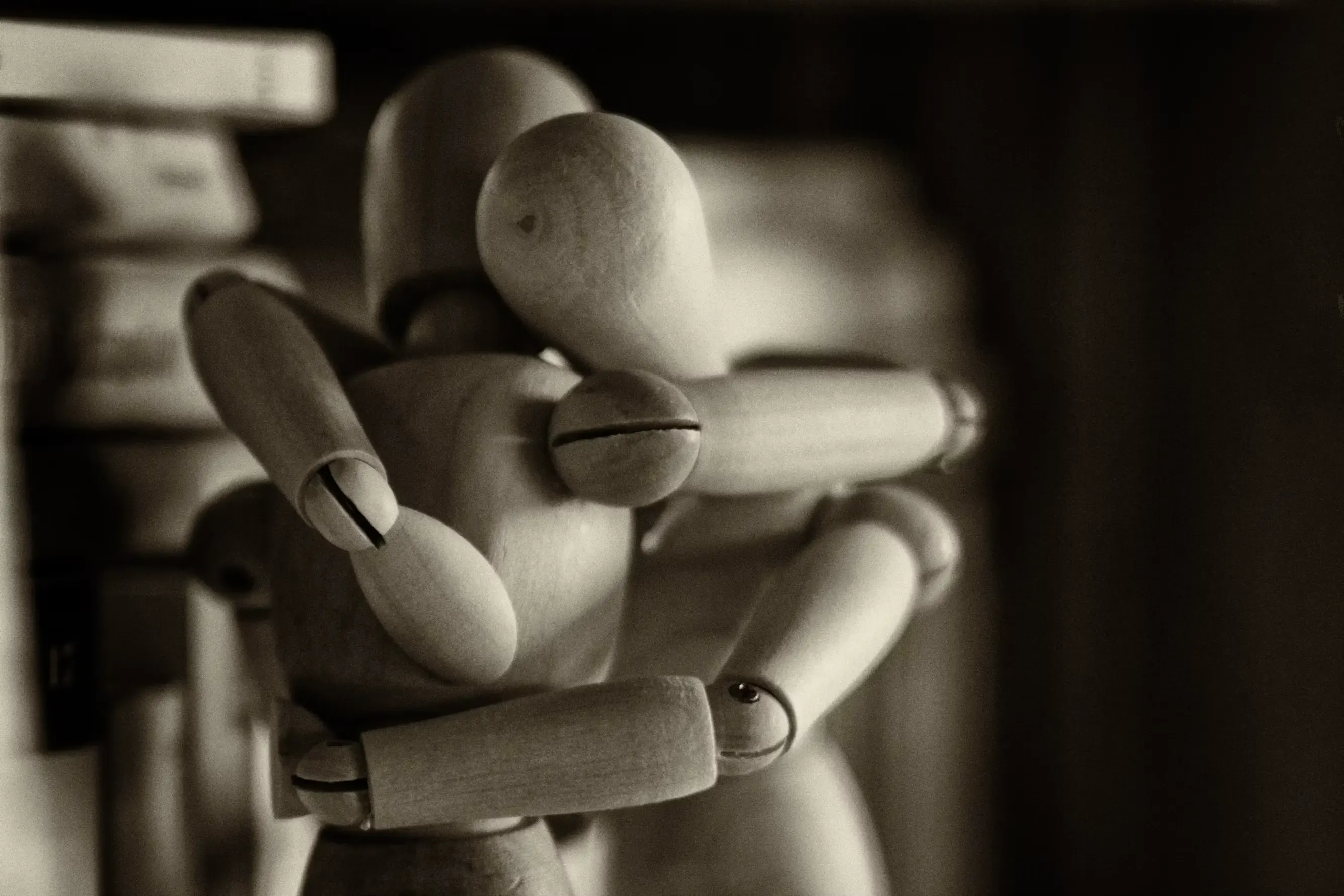
If dopamine is the engine that drives us to seek what we want, oxytocin is the anchor that binds us to others. Popular culture and consumer psychology have cheerfully christened it the «love hormone», the hug hormone, the happiness hormone. Yet modern neuroscience reveals that this view is dangerously incomplete. To reduce oxytocin to romantic affection is to ignore its role as one of evolution’s most powerful tools for survival and collective protection.
This chemical compound —acting as a hormone in the body and a neurotransmitter in the brain— is made in the hypothalamus and released through the pituitary gland. Its true function isn’t to make us float on a cloud of affection, but to act as a bio-regulator of trust, fear and social alliances.
Unlike other compounds in our body, oxytocin holds an impeccable dual biological passport:
- As a hormone: it is synthesized in the hypothalamus and released through the pituitary into the bloodstream. It travels through the body triggering the essential contractions of childbirth and stimulating the ejection of breast milk.
- As a neurotransmitter: it is released directly in the brain, where it shapes social behaviour, modulates fear and lets us read other people’s facial expressions to tell whether we can trust them.
The circle experiment: us versus them
Oxytocin doesn’t make us kind to everyone: it makes us loyal to our «tribe». Recent social-neurobiology experiments have shown that when oxytocin is administered nasally to a group of people, their generosity, empathy and cooperative spirit soar… but only toward members of their own team.
Evolutionarily, this makes perfect sense:
     [ MY TRIBE  ]   <=== ( Oxytocin ) ===>  [ LOVE / PROTECTION ]
     [ OUTSIDERS ]   <=== ( Oxytocin ) ===>  [ SUSPICION / REJECTION ]
By over-developing attachment to one’s own group, oxytocin automatically heightens suspicion, prejudice and hostility toward the out-group. It’s the chemistry behind sports fanaticism, extreme nationalism and «us versus them» bias.
The biological origin
Oxytocin’s oldest and best-documented role isn’t in the mind but in the reproductive organs. It’s the substance responsible for starting the contractions of the uterus during labour and for stimulating the ejection of breast milk during nursing.
The brain, however, harnesses this physical mechanism to create something far deeper: mother-child attachment. During birth and the first skin-to-skin contacts, both mother and baby experience a massive flood of oxytocin. That chemical peak acts as a «neural glue» that ensures the mother protects her defenceless offspring, securing the continuity of the species.
The shield against stress
One of oxytocin’s most fascinating functions is its ability to act as a fast-acting natural anxiolytic. When we face a threat, a brain structure called the amygdala fires up, releasing cortisol and adrenaline —the hormones of stress and the fight-or-flight response.
Oxytocin has the unique ability to dock onto the amygdala’s receptors and «turn down the volume» of that alarm signal. By reducing anxiety and fear, it also lowers blood pressure and heart rate. That’s why a sincere hug or a conversation with someone we trust has the physical power to calm us during a crisis: oxytocin is chemically disarming stress.
The trust paradox: the dangers of too little and the «dark side» of too much
As we’ve seen, the balance of oxytocin dictates how we relate to the world, but its extremes break social bridges:
- Levels too low (isolation): chronically low oxytocin is linked to a deep difficulty forming meaningful bonds. People with severe social anxiety or certain variants of the autism spectrum often show reduced sensitivity to this substance, turning everyday interactions into an indecipherable challenge.
- Levels too high (ethnocentrism and rejection of the stranger): here lies neuroscience’s great recent discovery. Oxytocin doesn’t make us love everyone: it makes us love our group intensely (family, friends, tribe). An excess sharpens distrust, aggression and rejection toward those we deem «outsiders» or different, feeding prejudice and sectarianism. That’s why an excess of oxytocin can lead both to extreme emotional dependence (a pathological fear of abandonment) and to discrimination and blind favouritism, in which any immoral act is justified as long as it benefits members of one’s own circle.
The epidemic of distance: how hyperconnectivity weakens real attachment
Our ancestors needed to cooperate face to face to hunt and protect themselves. The human brain learned to release oxytocin through direct gaze, tone of voice, body language and physical contact.
The problem of the digital age is that we’ve replaced real interactions with virtual connections. A «like», a comment on social media or a text message can trigger dopamine —the fast-reward circuit—, but they barely touch the oxytocin system. Spending hours hyperconnected yet physically isolated, the brain enters a kind of «social malnutrition», which explains why modern societies feel lonelier than ever despite being more connected.
Scientific ways to boost your baseline oxytocin
Unlike other neurotransmitters, the oxytocin factory needs no expensive supplements or magic pills: it’s stimulated through behaviour and the design of our relationships.
- Consensual physical contact. Hugs longer than twenty seconds, holding hands or a massage immediately raise baseline levels and lower cortisol.
- Meaningful conversations. Truly listening to someone, without looking at your phone screen, activates mirror neurons and synchronizes the release of oxytocin between both people.
- Bonds with animals. Petting a dog or a cat doesn’t just relax the animal: science shows it raises the human’s oxytocin just as a healthy human interaction does.
- Singing or training in a group. Synchronized activities with others (choirs, dance classes, team sports) generate a strong sense of belonging and healthy peaks of this hormone.
Oxytocin is not a mere romantic potion. It’s the sophisticated biological mechanism that reminds us that human beings are deeply social animals. Understanding how it works lets us design healthier communities, lower collective anxiety and remember that the real safety net isn’t on a screen, but in the people around us.
In the next article we’ll travel from social bonds to inner balance: serotonin. We’ll discover why the true control centre of your mood isn’t in your head, but in your gut.
We're building the space for you to comment on the articles.
Continue reading

On testosterone, status and metabolic health
A neurobiological journey through the hormone that governs how we position ourselves before others, and how to tune its inner factory

Draughts and summer colds
The mystery of peripheral thermal sensitivity and the false alarms of the autonomic nervous system

Sunlight against H. pylori
How UVB radiation and vitamin D3 switch on the natural defenses that fight this gastric pathogen