The contagion dilemma
The hidden hypothesis about the origin of pandemics, the role of exosomes and environmental medicine
Imagine a team of researchers landing in a city battered by a strange wave of fires. On every corner where a building burns, they invariably observe red trucks and people in fireproof suits pouring water. After analysing hundreds of cases, the team reaches an obvious conclusion: firefighters cause fires. The solution, therefore, is to eradicate firefighters.
This paradox of «mistaking the fire for the hoses» is the starting point from which Dr. Thomas Cowan —physician, author and exponent of anthroposophic medicine— invites us to rethink one of the most sacred pillars of modern science: virology and the theory of contagion.
Since the end of the 19th century, orthodox medicine has operated under a warlike paradigm: the human body is a sovereign territory threatened by invisible armies of external pathogens. Viruses and bacteria are portrayed as stealthy aggressors that invade healthy cells to hijack their genetic and metabolic machinery and spread disease.
Yet, influenced by the naturalist philosophy of Rudolf Steiner and by recent advances in cell biology, Cowan poses an uncomfortable but fascinating question: what if what we call a «virus» were not an infectious microorganism at all, but an internal cleaning mechanism, a metabolic residue or a distress signal that the cell itself emits when subjected to extreme environmental stress?
To understand this conceptual break, we need to go back to the foundations on which modern microbiology was built and examine a rule of the game that, according to Cowan, contemporary virology has stopped honouring: Koch’s postulates.
1. Koch’s postulates and the theory of contagion
At the end of the 19th century, the German physician and microbiologist Robert Koch transformed the history of public health. At a time when the causes of tuberculosis, cholera or anthrax were the object of mystical or miasmatic speculation, Koch established a rigorous method for scientifically demonstrating that a specific microorganism is the direct and indisputable cause of a given disease.
That method was distilled into the well-known four postulates of Koch, regarded for more than a century as the gold standard of biological causality:
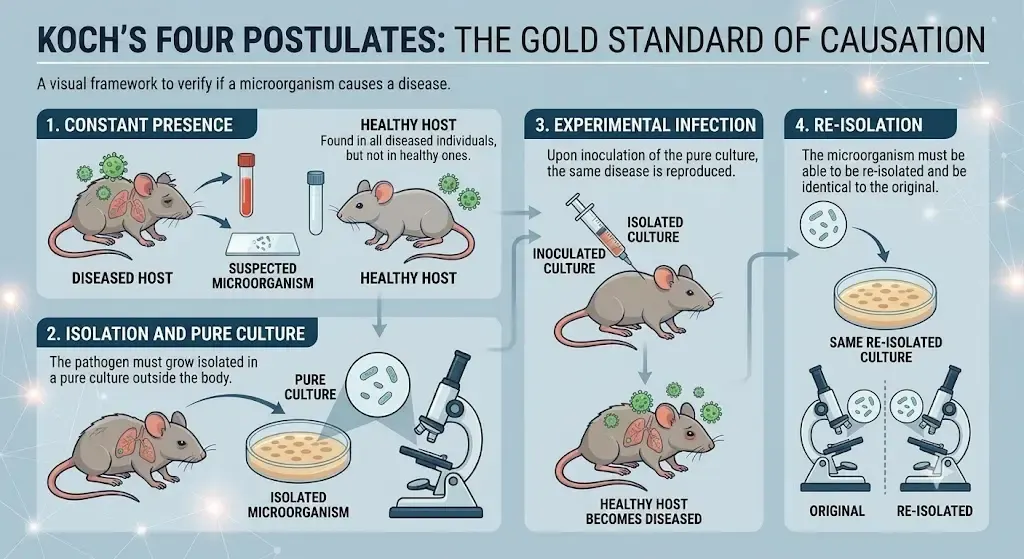
- Constant presence: The microorganism must be found in every individual suffering from the disease, and must not be found in healthy individuals.
- Isolation and purification: The agent must be extractable from the diseased organism and cultivable outside it in a pure medium, completely separated from any other cell or organism.
- Experimental infection (causality): When this pure culture is introduced into a healthy, susceptible host, exactly the same clinical disease must be reproduced.
- Re-isolation: The microorganism must be extractable again from the subject infected in the experiment and shown to be identical to the one originally isolated.
For large bacteria such as Mycobacterium tuberculosis, these postulates were met precisely. However, the arrival of the concept of the «virus» in the early 20th century introduced a serious theoretical crack.
Unlike bacteria, viruses are not autonomous living organisms; they have no metabolism of their own and cannot replicate outside a living cell. Therefore, by definition, a virus can never be grown in a pure nutrient medium of the kind demanded by Koch’s second postulate.
To get around this obstacle, modern virology has redefined the word isolation. In contemporary laboratories, the process does not consist of extracting a virus directly from the fluids of a sick patient and separating it from all foreign genetic material. Instead, biological samples are placed in Petri dishes containing African green monkey kidney cells (Vero cells), mixed with antibiotics, antifungals and foetal bovine serum. When the cells in the dish disintegrate (cytopathic effect), the cause is formally assumed to be the virus.
It seems reasonable to consider that this procedure creates an illusion of causality. The cellular degradation observed in the dish would not prove the presence of an external viral killer, but the acute stress the cells undergo when they are deprived of nutrients and bombarded with chemicals inside the laboratory.
The Gallops Island mystery: when the theory of contagion failed
If the theory of direct viral transmission were irrefutable, demonstrating person-to-person contagion under controlled conditions should be a simple experiment. Yet the history of medicine holds uncomfortable episodes that challenge conventional assumptions.
During the «Spanish flu» of 1918, researchers from the U.S. Public Health Service led by Dr. Milton Rosenau carried out a rigorous study on Gallops Island (Boston). They took mucous secretions and blood from severely ill patients and inoculated them into the noses, throats and eyes of dozens of healthy volunteers. They even sat the volunteers in front of the sick so that they would breathe in their coughs and sneezes directly.
The result baffled the scientific community: not a single volunteer fell ill. Similar trials with horses produced the same null result. For authors such as Arthur Firstenberg (The Invisible Rainbow), this experimental failure suggests that mass respiratory illnesses are not transmitted by direct contagion, but occur as a simultaneous reaction of the population to a shared environmental factor.
2. From pathogen to exosome: cells and their distress messages
If what virology photographs under the electron microscope is not an invading pathogen, what are those tiny spheres crowned with genetic spikes? The answer rests on a key discovery of modern cell biology: exosomes.
An exosome is an extracellular vesicle of nanometric dimensions, coated by a lipid membrane that buds from the cell wall itself. Inside it carries genetic material (RNA or DNA) and proteins. For decades, biology considered these vesicles to be mere «cellular garbage». Today we know that they perform crucial functions of intercellular communication and homeostasis maintenance.
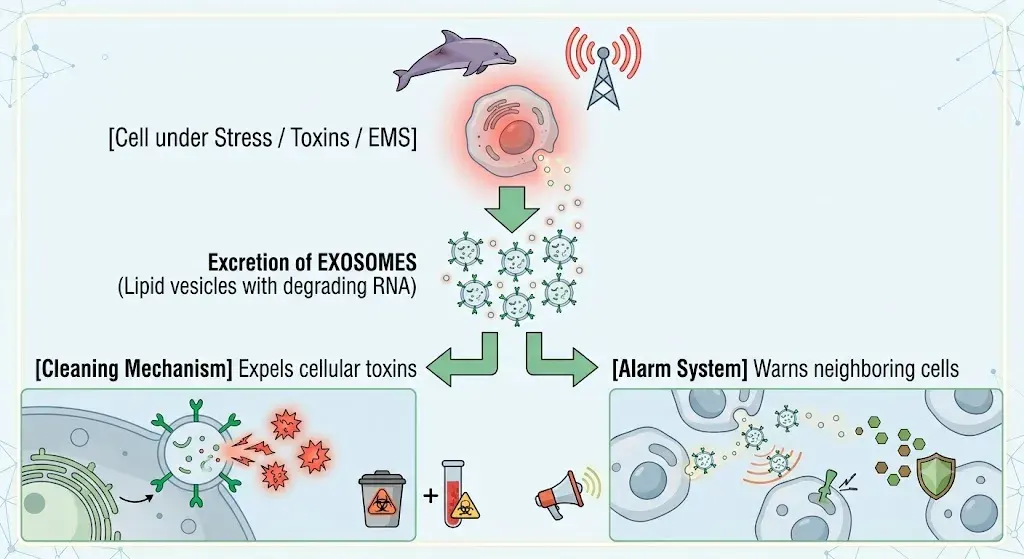
When a cell is subjected to chemical intoxication, malnutrition, oxygen deprivation or harmful electromagnetic fields, it reacts by expelling exosomes. These vesicles fulfil two main functions:
- Cellular cleaning: Expelling degraded genetic material and the toxins accumulated inside the cell in order to prevent its collapse.
- Alarm system: Sending chemical and genetic signals to neighbouring cells to warn them of an environmental threat, allowing them to activate their own defence mechanisms.
Under an electron microscope, an exosome and an RNA virus are identical in size, molecular structure, composition and behaviour. Even institutions such as the US National Institutes of Health (NIH) have acknowledged the practical difficulty of telling an enveloped virus apart from an exosome through standard morphological analysis.
To illustrate this concept, Cowan turns to analogies from the plant and animal kingdoms:
- The trees of the forest: If a stand of oaks is attacked by an insect plague or contaminated by a chemical in the soil, the trees secrete volatile substances that travel through the air and through the underground mycelial network. Those substances warn distant trees to start synthesizing defensive tannins. No botanist would claim that the first tree «infected» the second with a destructive virus; it is a biological language of defensive communication.
- Wildlife: If hundreds of dolphins are found stranded on Arctic shores, or thousands of frogs suddenly disappear from a marsh, science does not look for a «contagious virus» that jumped from frog to frog. The first scientific hypothesis is to analyse the water in search of pesticides such as DDT, heavy metals or industrial dumping.
In Cowan’s view, viruses are nothing more than the exosomes of the human body: the «smoke signals» our cells emit when the biological environment turns toxic.
3. A critique of diagnostic tests
If viruses have not been purely isolated by Koch’s standard and are morphologically indistinguishable from exosomes, how is it that laboratory tests detect their presence in millions of people during a pandemic?
Cowan directs his critique at the concept of surrogate tests, using an everyday analogy to expose their limitations:
Suppose you want to know exactly how many people there are in a city. The definitive method —the gold standard— would be to physically count each inhabitant one by one. If that count proves too complex, you could opt for a «surrogate test»: measuring the sale of shoelaces in local shops.
Logic would suggest that the more people, the more laces sold. However, the margin of error is enormous: there will be people with ten pairs of shoes, people who walk barefoot and shoes that use no laces. If you do not first validate lace sales against a real headcount, the surrogate test does not measure the population, but simply the dynamics of the footwear market.
In contemporary viral diagnostics, the reigning test is RT-PCR (reverse transcription polymerase chain reaction). Cowan recalls that the creator of the technique himself, Nobel laureate in Chemistry Kary Mullis, repeatedly insisted that PCR is a genetic amplification tool conceived for laboratory research, not a quantitative diagnostic method for infectious diseases.
PCR works by taking a minuscule sample of genetic material and multiplying it exponentially through thermal cycles. One cycle doubles the sample; two cycles quadruple it, and so on.
The methodological key lies in the cycle threshold (Ct):
- If the test is run at 25 or 30 cycles, the number of genetic signals detected is small.
- If the test is raised to 40 or 45 cycles, the process amplifies minuscule genetic sequences by a factor of trillions.
At those levels of amplification, the test is able to detect inert genetic fragments, residues of past infections or normal cellular degradation that every human being harbours in their body. Therefore, having failed to calibrate the test against a purified reference virus to determine what exact genetic load equals real illness, PCR can generate a «pandemic of false positives», in which the presence of amplified genetic fragments is mistakenly equated with an active infection.
4. The environmental cause of pandemics
At this point the inevitable question arises: if epidemic diseases are not caused by the transmission of viruses, why do thousands or millions of people fall ill at the same time in different places around the globe?
Thomas Cowan’s central thesis —developed at length in his book The Contagion Myth, written with Sally Fallon Morell— points to the massive, accelerated electromagnetic pollution of the planet.
Cowan holds that the human body is fundamentally an electrical organism. Chemicals, hormones and neurotransmitters would be no more than the secondary material traces of prior bioelectric impulses and fields. Therefore, when the Earth’s natural electromagnetic environment is altered, the biology of living cells is forced into a drastic restructuring in order to adapt, a process that manifests symptomatically as a collective illness.
Over the last 150 years, Cowan and other theorists of environmental medicine trace a historical synchrony between qualitative leaps in electrical technology and major global health crises:
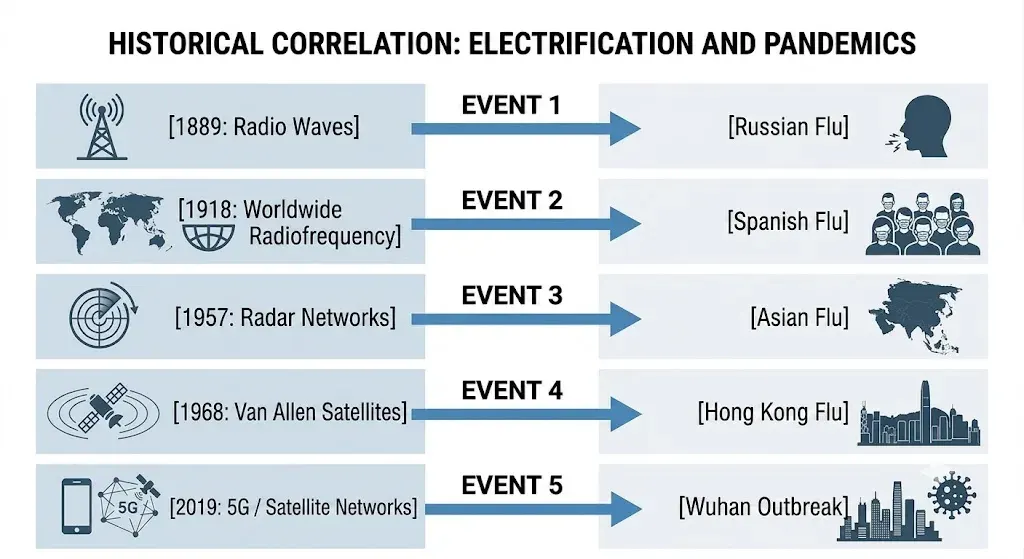
- 1889 (the Russian flu): Coincides with the initial installation of alternating-current electrical grids and the first large-scale radiotelegraphy infrastructure.
- 1918 (the Spanish flu): Coincides with the massive deployment of high-power radio transmitters on military bases and ships worldwide during the First World War. According to this hypothesis, that would explain why the disease seemed to emerge almost simultaneously in places as distant as Kansas, Europe and South Africa within weeks, a speed that the sea and rail transport of the time could not account for.
- 1957 (the Asian flu): Coincides with the global deployment of military radar systems after the Second World War.
- 1968 (the Hong Kong flu): Coincides with the launch of the first network of communication satellites in the Van Allen belt, the magnetospheric layer that protects the Earth from harmful cosmic radiation.
- The Wuhan outbreak and the present day: 5G is described as a «dramatic quantum leap» in electrification that is not compatible with human health.
The SARS-CoV-2 crisis and the role of 5G
The health crisis declared in 2020 on account of the supposed SARS-CoV-2 virus represents the culmination of this historical pattern. Far from seeing a new coronavirus that accidentally jumped from a pangolin or a bat to humans in an animal market, Cowan holds that the pandemic was the direct biological response to the most aggressive electromagnetic leap in human history: the commercial rollout of millimetre-wave 5G technology.
The geographical coincidence of the initial outbreak is not a minor detail, but the key clue to the phenomenon:
The Wuhan focus: In the autumn of 2019, the Chinese city of Wuhan was chosen as the world’s pilot centre for the massive rollout of the 5G network. Around 10,000 high-frequency antennas were installed in record time, making Wuhan the first major metropolis with almost total, interconnected 5G coverage across public areas, motorways and underground transport networks.
In Cowan’s view, the inhabitants of Wuhan suffered sudden, intensive exposure to electromagnetic fields of extremely high frequencies (capable of oscillating in the gigahertz range). The biology of a population already weakened by the region’s high levels of atmospheric and industrial pollution collapsed at the cellular level, triggering a massive excretion of exosomes —what laboratory tests ended up diagnosing as a «new coronavirus».
Cowan argues that the outbreak’s expansion pattern in early 2020 faithfully followed the map of 5G infrastructure rollouts around the world: regions such as northern Italy (Lombardy) or the New York metropolitan area, which led the initial mortality peaks, were precisely the urban centres with the highest density of operational 5G antennas and active pilot tests at the time.
Physiology of radiation: cellular water and hypoxia
To explain the clinical symptoms of COVID-19 —especially the severe respiratory distress and the sudden drop in blood oxygen saturation— Cowan turns to the biophysics of radiation and the physics of cellular water:
- The destructuring of the fourth phase of water: Drawing on the discoveries of Dr. Gerald Pollack about cellular or structured water (the exclusion zone, or EZ), Cowan explains that healthy cells work because the water inside them maintains an ordered colloidal structure that allows bioelectric charge to be stored. 5G frequencies alter this physical order, destabilizing proteins and disorganizing the cellular cytoplasm.
- Interference with oxygen molecules: Radiofrequency waves of 60 GHz (used in 5G bands) have the physical peculiarity of being preferentially absorbed by oxygen molecules (O₂). This radiation alters the polarity and spin of atmospheric oxygen, hindering its correct absorption by haemoglobin in human lungs. That would explain why critical patients did not show the typical pattern of conventional infectious pneumonia, but rather a kind of severe tissue hypoxia (asphyxia at the cellular level) without any necessary mechanical respiratory blockage.
- Exosomes as a generic smokescreen: Faced with this electromagnetic assault and the resulting lack of oxygenation, lung and vascular cells entered a state of extreme detoxification, releasing trillions of exosomes rich in degraded genetic material to alert the rest of the organism. When these lung secretion samples were analysed in laboratories through RT-PCR tests amplified to 40 cycles or more, the positive result interpreted the cell’s distress signal (the exosome) as the aggressor agent (SARS-CoV-2).
The amplifying role of heavy metals
Finally, Cowan holds that the pandemic’s uneven severity —the fact that some people fell gravely ill while others remained asymptomatic in the same environment— responds to each individual’s degree of metallic load and prior intoxication.
A key element in his theory is the presence of heavy metals in the organism, chiefly aluminium and mercury, accumulated over the years through the consumption of unfiltered water, agrochemicals, environmental pollution or repeated pharmaceutical interventions. Inside human tissue, these heavy metals act as genuine «biological micro-antennas».
An individual with a high heavy-metal load absorbs the surrounding electromagnetic radiation in amplified fashion, undergoing a much faster and more drastic cellular destructuring than a person with a detoxified biological terrain. The COVID-19 crisis was not the triumph of a virus over the human species, but a demonstration of the fragility of a hyper-intoxicated organism submerged in an unprecedented ocean of artificial radiation.
5. Towards a new paradigm of health
Thomas Cowan’s perspective does not aim to be a merely destructive critique of virology, but an invitation to shift the medical focus from the «war against the microorganism» towards the «cultivation of the biological terrain».
If disease is not caused by an invisible invader we must shield ourselves against, but by the toxic and electrical degradation of our environment, the solutions are not to be found in sterilization or permanent isolation, but in restoring the natural conditions of human life.
Proposals for detoxification and biological sovereignty
- Cleaning up the environment: Eliminating synthetic pesticides such as glyphosate, insecticides and plastics that disrupt the endocrine system, promoting regenerative and biodynamic agriculture.
- Cellular restructuring: Drinking pure spring water, free of heavy metals and fluorides, and eating nutrient-dense food free of industrial ultra-processed products.
- Electromagnetic hygiene: Drastically reducing exposure to Wi-Fi networks, mobile telephony and smart devices, especially during sleeping hours.
- Reconnecting with the Earth (grounding): Direct physical contact of bare feet with the earth’s surface allows the absorption of free electrons, which act as natural neutralizers of cellular oxidative stress.
- Spiritual strengthening: Recovering the thought of Rudolf Steiner, Cowan concludes that living in an increasingly electrified and hyper-technologized world demands developing far more robust inner strength and spiritual awareness in order to counter the invisible assaults of the modern environment.
6. The media’s demonization of Cowan’s theory
In everyday practice, Dr. Thomas Cowan’s theories have not been met with the calm academic debate that the history of science would demand. On the contrary, they have been the object of visceral rejection, personal disqualification and an active campaign of ridicule in Western media.
Fact-checking agencies label him a «conspiracy theorist» or «pseudoscientist». Yet an analysis of these fact-checks reveals a pattern: almost none of them technically rebut his arguments about Koch’s postulates or exosomes; they limit themselves to discrediting the man by appealing to official consensus.
Why does this happen? Why is there such media and institutional aggressiveness aimed at preventing the public from even contemplating these hypotheses? The answer requires analysing the complex web of economic, industrial and epistemological interests that sustain the global health model.
A. The pharmaceutical monopoly
The multinational business model depends on the external-pathogen paradigm. If disease is caused by an invading microorganism, the solution is a patentable product (antivirals, vaccines). If the cause is environmental or electromagnetic pollution, the model collapses: nobody can patent clean air, pure water or walking barefoot.
A public that understands health as the preservation of its «biological terrain» is a sovereign, preventive public, not a consumer dependent on pharmaceutical patents for life.
B. The telecommunications empire
Accepting that artificial radiofrequencies (from historical radar to microwaves and 5G) cause structural metabolic alterations in living cells would represent an existential threat to one of the most powerful industries on the planet. Telecommunications corporations and the governments that auction off the radio spectrum have invested vast sums in the rollout of 5G networks, urban antennas and satellite constellations in low Earth orbit.
Admitting a causal link between electromagnetic radiation and cellular stress (expressed in the massive emission of exosomes) would trigger health-damage lawsuits of incalculable proportions and force the shutdown of the infrastructure that sustains the global digital economy.
C. The mechanics of fact-checking
To understand why so-called fact-checkers discredit these theories without technically countering them, it is necessary to understand how these organizations work:
- The appeal to authority: Most fact-checkers are neither molecular biologists nor bioelectric physicists, but journalists whose methodology consists of contrasting a claim with the discourse of official institutions (WHO, CDC, FDA). If a hypothesis contradicts the institutional manual, the «false» label is applied automatically. The biological evidence is not assessed; what is assessed is the degree of alignment with official dogma.
- Funding and conflicts of interest: A large share of the main fact-checking agencies and mass media outlets receive direct or indirect funding from private foundations linked to the technology industry, digital-sector philanthropists and pharmaceutical sponsorships. There is an inevitable structural bias: no outlet funded by these actors is going to validate a theory that points to telephone networks or biotech products as causes of disease.
- The «straw man» strategy: To neutralize Cowan’s message before public opinion, the media resort to simplified caricature. Instead of explaining his critique of cell-culture methodology or of the function of exosomes, they will run the headline: «The quack doctor who claims 5G transmits a virus». By presenting the idea in a ridiculous form, the average reader instinctively dismisses it without having grasped the underlying physics or biology.
D. The view from orthodox science: the inertia of dogma
Beyond economic interests, there is a sociological factor within the scientific community itself: paradigm inertia. As the philosopher of science Thomas Kuhn analysed in The Structure of Scientific Revolutions, the dominant academic community rarely welcomes a paradigm shift, since it would mean admitting that decades of research, textbooks, prizes and professional careers were built on incomplete or mistaken premises.
For official virology, modern genomics (the ability to sequence RNA chains on computers) constitutes irrefutable proof of the existence of viruses, and Koch’s postulates are considered a 19th-century standard superseded by current technology. For Cowan and the model’s critics, computational sequencing is nothing more than the digital recomposition of fragments of degraded cellular tissue, not the demonstration of a living, purified agent.
Conclusion: science as an open dialogue
Dr. Thomas Cowan’s hypotheses directly challenge the consensus of virology. For mainstream medicine, doing away with the pathogenic virus theory is methodologically unacceptable; for the defenders of environmental medicine, ignoring the impact of global electrification on the human cell is a historic blindness.
History shows that great advances were born of persecuted heresies: from Ignaz Semmelweis (ridiculed for asking doctors to wash their hands) to Galileo Galilei. As citizens and «users» of medicine, our commitment should consist of not letting ourselves be carried away by dogmas, learning to value different points of view and training our critical sense, putting on the table the big questions that shake the foundations of knowledge.
The debate raised by Thomas Cowan, beyond its controversies, forces us to reflect on a fundamental lesson: human health is not a perpetual war against a hostile microbial world, but the delicate and fascinating balance between our bioelectric organism and the environment we inhabit.
Relevant videos
References and scientific support
- Cowan, Thomas, & Fallon Morell, Sally. (2020). The Contagion Myth: Why Viruses (Including “Coronavirus”) Are Not the Cause of Disease. Skyhorse Publishing. Read on Academia.edu
- Firstenberg, Arthur. (2017). The Invisible Rainbow: A History of Electricity and Life. AAG Press. Read on Google Books
- Steiner, Rudolf. (1923). Lectures on anthroposophic medicine. (The philosophical and ideological basis Dr. Cowan draws on.)
- Dismantling the theory of contagion. Watch on YouTube
- Dr. Tom Cowan | What is a virus? Watch on YouTube
- A 10-minute excerpt from Dr. Thomas Cowan’s lecture. Watch on YouTube
- Exosomes: From garbage bins to translational medicine. Read the study on PubMed
- Exosome Secretion — More Than Simple Waste Disposal? Implications for Physiology, Diagnostics and Therapeutics. Read the study on PubMed
- Exosomes as Cellular Communicators and Therapeutic Agents in Orthopedic Diseases: From Mechanisms to Intervention. Read the study on PubMed
- Exosomes-mediated intercellular communication and their theragnostic potential against cancer and related disorders: a comprehensive review. Read the study on PubMed
- Exosomes maintain cellular homeostasis by excreting harmful DNA from cells. Read the study on PubMed
- Exosome Release Delays Senescence by Disposing of Obsolete Biomolecules. Read the study on PubMed
We're building the space for you to comment on the articles.
Continue reading

Science under coercion
mRNA, the freedom at stake and the consent nobody asked for

Sunlight against H. pylori
How UVB radiation and vitamin D3 switch on the natural defenses that fight this gastric pathogen
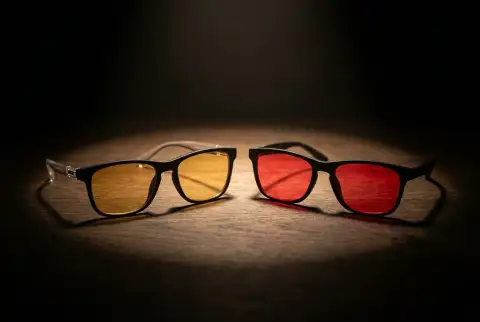
Blue blocker glasses
The optical shield that protects you from the artificial light wrecking your biology