Vitamin B5
The universal connector of life and the cell's invisible engine

Pantothenic acid —vitamin B5— is a water-soluble molecule fundamental to the cellular survival of every living thing. Although it is one of the least publicised substances in the B complex, its presence is indispensable across many human biochemical routes: it takes part in breaking macronutrients down for metabolic energy, in the synthesis of steroid hormones in the adrenal glands, and in the machinery needed for haemoglobin to mature inside red blood cells.
What sets this molecule apart is how omnipresent it is in animal and plant tissue. Its very name comes from the Greek root pantothen, «from everywhere». And yet, although it is present in practically every unprocessed food, the metabolic mechanisms through which it works inside the body tend to be a mystery to the general public.
Technical profile
| Parameter | Detail |
|---|---|
| Chemical names | D-pantothenic acid, calcium pantothenate, panthenol and pantethine. |
| Type | Water-soluble, from the B complex: the surplus leaves in the urine and it has to be topped up daily. |
| Main superpower | Serving as the structural core of coenzyme A (CoA), the universal molecular hitch of cellular metabolism. |
| Quick fun fact | It is so ridiculously abundant in nature that an isolated deficiency in humans is one of the rarest medical phenomena on the planet: it has practically only been documented in extreme famine and on synthetic experimental diets. |
A little history…
In the early twentieth century, biochemistry was living through a golden age of compulsive discovery. Scientists were isolating compounds from yeast and rice at a dizzying pace, naming each substance after the disease it prevented: thiamine (B1) cured beriberi; niacin (B3) held off pellagra. But an American biochemist named Roger J. Williams stumbled in 1933 onto a different sort of puzzle.
Williams was not hunting for a cure to a human plague; he was trying to work out exactly which chemical substance brewer’s yeast needed in order to multiply. He observed that, no matter which biological tissue he ground up in the laboratory —ox liver, boiled spinach, gut bacteria or apple juice— an acidic, highly water-soluble fraction always turned up, and it dramatically accelerated the growth of the microorganisms.
The substance seemed to be a biological shadow impossible to shake off. Fascinated by its ubiquity, Williams proposed naming it with a word of Greek root: pantothenic acid, from pantothen, which translates literally as «from everywhere».
Discovering the molecule, however, was only half the mystery. For nearly two decades nobody understood what exactly that vitamin was doing inside the human body. Why had nature gone to the trouble of putting pantothenic acid into every living cell on the planet?
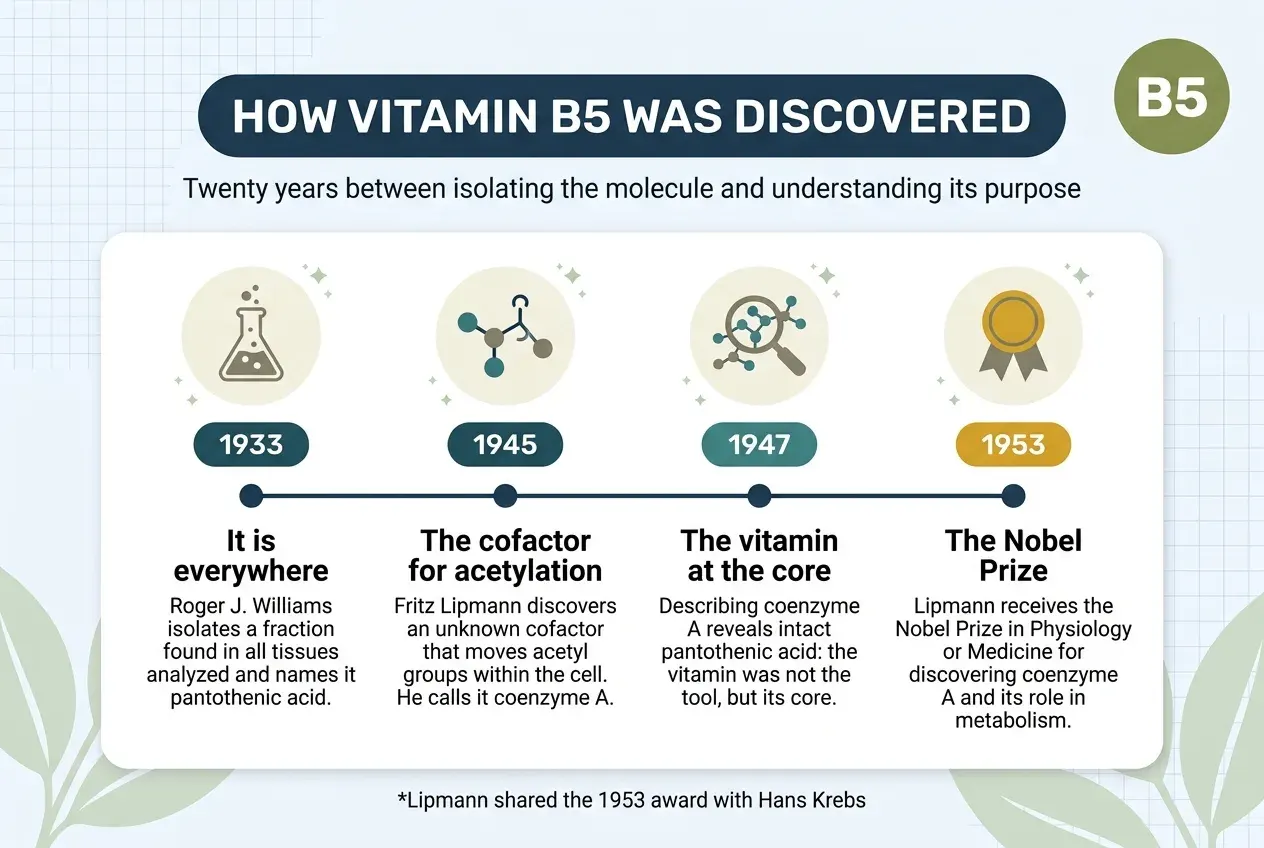
The answer arrived in 1945, courtesy of the German-American biochemist Fritz Lipmann. Working at Massachusetts General Hospital, Lipmann was trying to decipher how cells manage to glue carbon fragments to one another in order to build fats or break down sugars. He found a chemical cofactor unknown until then, and called it coenzyme A, where the «A» stands for acetylation: the transfer of acetyl groups.
When he analysed the fine structure of that intricate chemical architecture, he got a historic surprise: sitting intact at its very centre was the pantothenic acid molecule Williams had described years earlier. Vitamin B5 was not the tool itself; it was the indispensable structural component for building the fundamental hammer of cellular life. The finding earned Lipmann the Nobel Prize in Physiology or Medicine in 1953, and raised the modest pantothenic acid to the highest altar of modern biochemistry.
A manual of cellular mechanics: what does vitamin B5 do in your body?
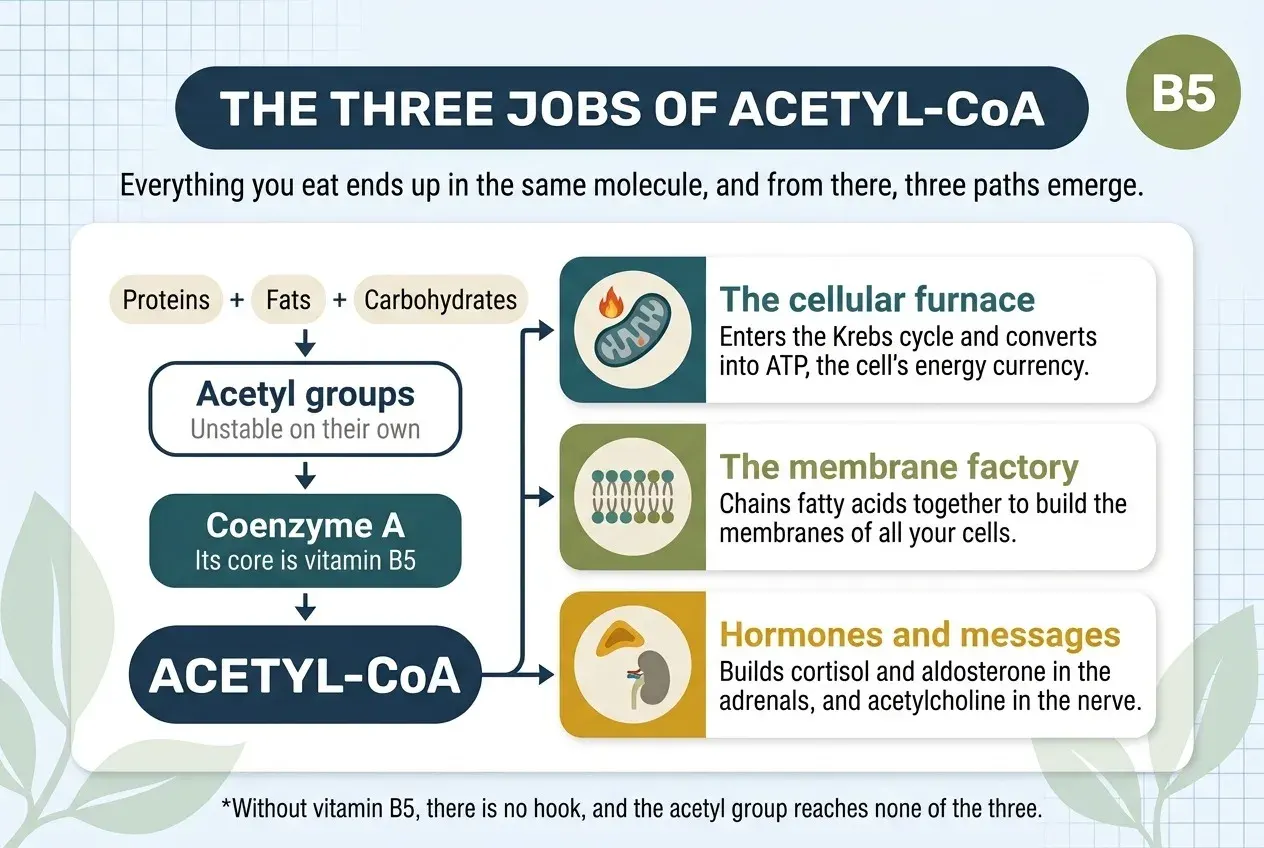
To understand what vitamin B5 does in your cells, picture a high-precision machine shop. The proteins, fats and carbohydrates you eat arrive at the shop as massive blocks of metal. To turn them into energy or into spare parts, the metabolic workers —the enzymes— need to cut those blocks into small two-carbon pieces called acetyl groups.
But a free acetyl group is chemically unstable and dangerous. It needs a vehicle with a special hitch so it can be carried safely without destroying the cell. That vehicle is coenzyme A (CoA), and the tow hook is vitamin B5.
When vitamin B5 is converted into coenzyme A through a series of intracellular phosphorylations, and coenzyme A then loads an acetyl group to form acetyl-CoA, it takes on three immense biological roles.
The central customs post of metabolism: the Krebs cycle
Whether you eat an apple (carbohydrates), a steak (protein) or an avocado (fat), every degradation route converges on a single nodal point: the formation of acetyl-CoA. It is the fuel that feeds straight into the mitochondrial matrix to stoke the Krebs cycle, the cellular furnace. Without B5 the furnace goes out, and the cell is left unable to turn food into ATP, the biological energy currency.
The lipid and membrane factory
Vitamin B5 does not only help to «burn» fat through beta-oxidation; it is also indispensable for building it. It forms part of the acyl carrier protein (ACP), a molecular arm that assembles the fatty acids needed to raise the plasma membranes of all your cells. Without that mechanism, the structural integrity of your tissues would collapse.
The synthesis of hormones and neurotransmitters
In the cortex of the adrenal glands, coenzyme A is the tool with which the body turns cholesterol into steroid hormones indispensable for survival:
- Cortisol: the molecule that manages stress and inflammation.
- Aldosterone: the regulator of blood pressure and salt balance.
- Neurotransmitters: in the nervous system, acetyl-CoA hands its acetyl group over to choline to synthesise acetylcholine, the chemical messenger essential for memory, concentration and muscle contraction.
The adrenal glands are, in fact, massive devourers of vitamin B5. Why? Because cholesterol —the basic precursor of hormones such as cortisol, aldosterone, DHEA, testosterone and the oestrogens— is built step by step by joining multiple acetyl-CoA molecules together. Without enough pantothenic acid, adrenal steroid production is seriously compromised.
The art of bioavailability
Few molecules live up to their name as firmly as vitamin B5. Since every living cell —animal, plant, fungal or bacterial— needs coenzyme A to survive, practically any food that has not been ultra-processed contains pantothenic acid.
The main sources of vitamin B5
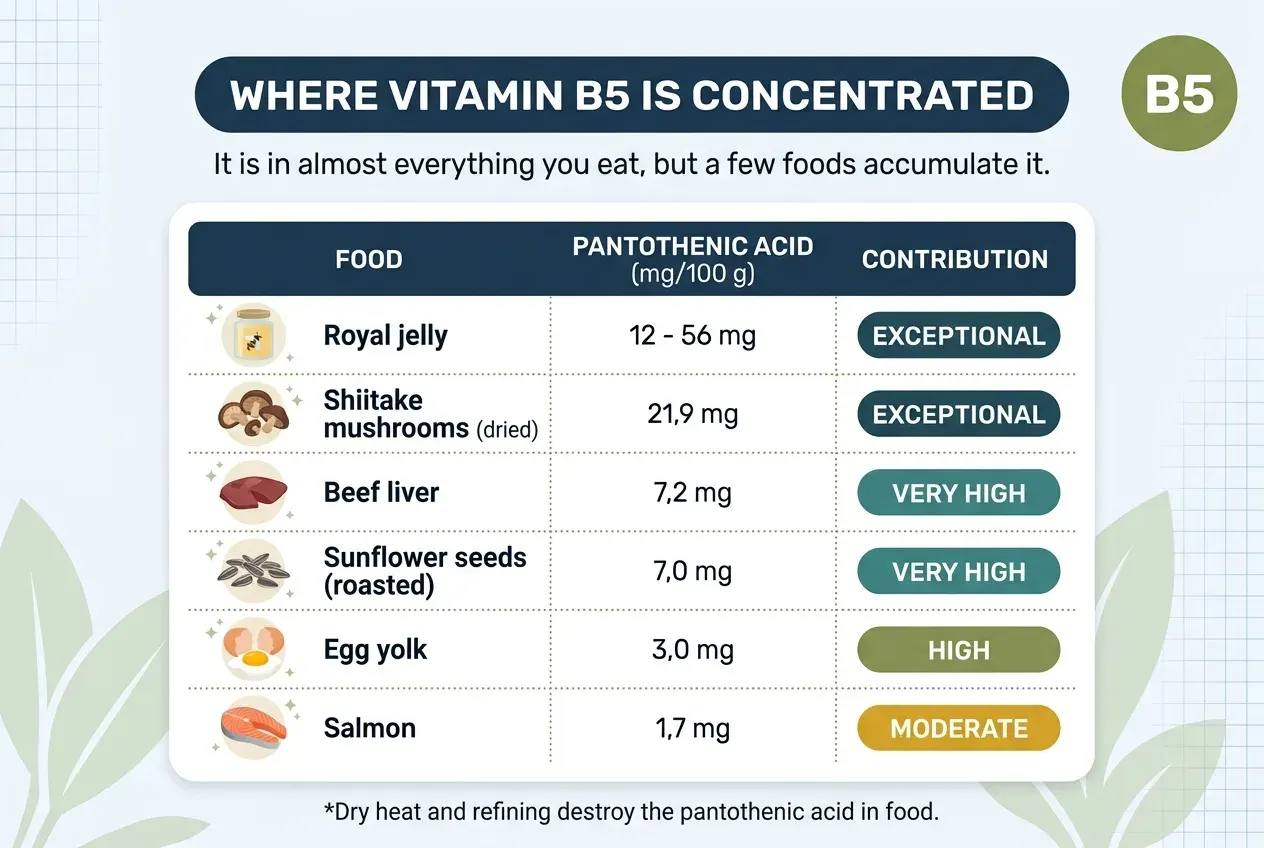
Although it is present in almost everything, some ingredients are genuine concentrated bombs of B5:
- Offal: liver and kidneys are among the richest larders, being the most metabolically active organs and the ones most packed with mitochondria.
- Mushrooms: mushrooms, and Asian varieties such as shiitake in particular, are exceptional collectors of this vitamin: dried, they come close to 22 mg per 100 grams, more than any other food in the pantry.
- Seeds and nuts: sunflower seeds are true treasure chests of B5.
- Egg yolk and avocado: they carry highly soluble forms, protected inside natural lipid matrices.
- Royal jelly: it is the densest natural source of pantothenic acid known, although the content varies enormously with its origin —between 12 and 56 mg per 100 grams.
Synergies and antagonists
For vitamin B5 to be absorbed optimally in the jejunum —the middle stretch of the small intestine— it first has to be released from the coenzyme A present in food by pancreatic enzymes. From there, what decides how much reaches your cells is the company it keeps:
| Allies of absorption | Antagonists and destroyers |
|---|---|
| A coordinated B complex: converting B5 into coenzyme A demands magnesium, ATP and the presence of vitamins B6 and B12; and there is no point in having plenty of B5 if B2 is missing to complete the respiratory chain. They work as an orchestra. | Alcohol: chronic ethanol consumption damages the intestinal epithelium and inhibits the active transport of pantothenate in the enterocytes, mediated by the sodium-dependent multivitamin transporter (SMVT). |
| Gut microbiota: bacteria such as Escherichia coli and genera of Lactobacillus synthesise pantothenic acid naturally in the colon, although the exact level of systemic absorption is still being researched. | Prolonged dry heat: high-temperature sautéing and deep frying break the molecule at its amide bond. |
| Healthy fats: taking B5 alongside healthy lipids stimulates bile release and optimises digestion in general. | Refining and ultra-processing: refined sugars and white flours supply «empty calories» that consume B5 to be metabolised without giving any back. |
Light and shadow: deficiency versus toxicity
The deficit
An isolated vitamin B5 deficiency is extremely rare in the general population. History, however, has handed us dramatic scenarios in which to study what happens when the molecule disappears entirely.
During the Second World War, thousands of prisoners in the camps of South-East Asia began to experience a chilling clinical picture known as burning feet syndrome: a stabbing burn in the soles of the feet that sharpened at night and that receded when pantothenic acid was administered.
Today, deficiency is only seen in people with extreme protein-energy malnutrition, severe alcoholism, or a hyper-rare genetic condition called PKAN (pantothenate kinase-associated neurodegeneration), a mutation in the PANK2 gene that interferes with the first stage of coenzyme A synthesis in the brain and causes a toxic build-up of iron in the basal ganglia.
The symptoms of a B5 deficiency map exactly onto the tissues that consume the most coenzyme A:
- Nervous system: paraesthesia, insomnia, chronic fatigue and poor motor coordination, from the inability to make the myelin that sheathes the nerves and the neurotransmitter acetylcholine.
- Endocrine system: atrophy of the adrenal cortex, hypotension, muscle weakness and an inability to tolerate metabolic or environmental stress.
- Digestive tract: abdominal pain, nausea and spasms, caused by the loss of muscle tone in the intestinal walls.
Toxicity
Being a water-soluble vitamin, the human body has an extraordinarily efficient renal clearance system for B5. If you take in more pantothenic acid than your cells need to saturate their coenzyme A reserves, the excess is filtered freely through the renal glomeruli and eliminated in the urine.
There is no formally established tolerable upper intake level (UL) for vitamin B5, since no serious toxic effects, hepatotoxicity or neurotoxicity have been documented in humans, not even with massive oral doses of several grams a day.
The myth corner
«The panthenol in shampoo repairs your hair»
Open almost any bottle of shampoo or conditioner in your bathroom and you will very likely find ingredients such as D-panthenol or «pro-vitamin B5» on the label. For decades, advertising has sold us the idea that applying this vitamin to the hair «feeds the hair fibre from the outside and brings it back to life».
The scientific reality: the strand of hair that emerges from the scalp is a biologically dead structure, made of crystallised keratin, with no metabolism, no mitochondria and no capacity whatsoever to synthesise coenzyme A. Vitamin B5 cannot «nourish» or repair dead hair from the outside.
D-panthenol does, however, have one useful physical property: it is an extraordinary hygroscopic humectant. It penetrates the outer cuticle of the hair slightly and attracts water, which temporarily increases the apparent thickness of the fibre and reduces friction. The benefit is purely cosmetic and physical, not nutritional. For vitamin B5 to genuinely help the health of the hair follicle —where there are living cells— it has to arrive through the blood microcirculation from inside the body, which is to say through the diet.
The scientific frontier
Far from the clichés of advertising, today’s biomedical research is uncovering fascinating facets of vitamin B5 in highly specialised fields.
Neurodegeneration: PKAN disease
In precision neurology, the study of PKAN (pantothenate kinase-associated neurodegeneration) stands out. It is a rare and devastating genetic disease in which a mutation in the PANK2 gene disables the enzyme responsible for phosphorylating vitamin B5 in the brain.
Without that reaction, the neurons of the basal ganglia suffer an unsustainable coenzyme A deficit, which causes a pathological accumulation of iron in the brain, severe dyskinesia and dementia. Scientists are testing derivative molecules such as pantethine, along with synthetic precursors able to bypass the enzymatic block and cross the blood-brain barrier, opening a path of hope for these patients.
The microbiota as an internal pantothenate factory
Recent research on the human microbiome has revealed that commensal bacteria in our colon —strains of Escherichia coli and of the genus Bacteroides in particular— hold the complete genetic machinery to synthesise pantothenic acid de novo.
Frontier science is studying how that bacterial production of B5 in the gut not only contributes to the host’s nutritional status, but acts as a metabolic communication signal that regulates the differentiation of immune cells —the regulatory T lymphocytes— in the intestinal mucosa, and thereby modulates systemic inflammation.
Epigenetics and longevity
Acetyl-CoA, whose heart is B5, does not only produce energy: it is the donor of the acetyl group needed for the acetylation of histones, the proteins around which DNA is wound. When a histone is acetylated, the structure of the chromatin «opens up» and allows genes to be read and expressed. Changes in the cellular availability of acetyl-CoA directly modulate gene expression, DNA repair and the processes of cellular ageing, which places vitamin B5 at the centre of contemporary epigenetic biology.
Next stop…
With that we close the file on this all-terrain molecule, the humble worker operating from the shadows so that the trillions of cells in your body can breathe, rebuild themselves and obtain energy. But our journey through the empire of the micronutrients does not stop here.
In the next article: vitamin B6 (pyridoxine), the conductor of protein metabolism, the chemistry behind serotonin, and the catalyst without which our brain could not manufacture the thoughts that define us.
References and scientific support
- The paper that isolated the fraction and named it after being everywhere. Williams, R. J., Lyman, C. M., Goodyear, G. H., Truesdail, J. H., & Holaday, D. (1933). “Pantothenic acid,” a growth determinant of universal biological occurrence. Journal of the American Chemical Society, 55(7), 2912-2927. View study (DOI)
- The finding that coenzyme A carries pantothenic acid at its core, which won the 1953 Nobel. Lipmann, F., Kaplan, N. O., Novelli, G. D., Tuttle, L. C., & Guirard, B. M. (1947). Coenzyme for acetylation, a pantothenic acid derivative. The Journal of Biological Chemistry, 167(3), 869-870. View on PubMed
- The review that orders coenzyme A biosynthesis and everything it holds up. Leonardi, R., Zhang, Y.-M., Rock, C. O., & Jackowski, S. (2005). Coenzyme A: back in action. Progress in Lipid Research, 44(2-3), 125-153. View study (DOI)
- The official report that sets out SMVT-mediated absorption and the reference intakes. Institute of Medicine (US) Standing Committee on the Scientific Evaluation of Dietary Reference Intakes (1998). Dietary Reference Intakes for Thiamin, Riboflavin, Niacin, Vitamin B6, Folate, Vitamin B12, Pantothenic Acid, Biotin, and Choline. National Academies Press. View the pantothenic acid chapter
- The measurement confirming royal jelly as the richest natural source, with huge variation by origin. Ciulu, M., Floris, I., Nurchi, V. M., Panzanelli, A., Pilo, M. I., Spano, N., & Sanna, G. (2013). HPLC determination of pantothenic acid in royal jelly. Analytical Methods, 5(23), 6682-6685. View study (DOI)
- The original description of burning feet syndrome, which reversed with pantothenate. Gopalan, C. (1946). The “burning-feet” syndrome. The Indian Medical Gazette, 81(1), 22-26. View study on PMC
- Deficiency induced with an antimetabolite: adrenal failure, hypotension, weakness and insomnia. Hodges, R. E., Bean, W. B., Ohlson, M. A., & Bleiler, R. (1959). Human pantothenic acid deficiency produced by omega-methyl pantothenic acid. The Journal of Clinical Investigation, 38(8), 1421-1425. View study (DOI)
- Acetyl-CoA as a second messenger governing histone acetylation and autophagy. Pietrocola, F., Galluzzi, L., Bravo-San Pedro, J. M., Madeo, F., & Kroemer, G. (2015). Acetyl coenzyme A: a central metabolite and second messenger. Cell Metabolism, 21(6), 805-821. View study (DOI)
- Cutting off tuberculosis’s pantothenate leaves it harmless, and works as a vaccine in mice. Sambandamurthy, V. K., Wang, X., Chen, B., Russell, R. G., Derrick, S., Collins, F. M., Morris, S. L., & Jacobs, W. R., Jr. (2002). A pantothenate auxotroph of Mycobacterium tuberculosis is highly attenuated and protects mice against tuberculosis. Nature Medicine, 8(10), 1171-1174. View study (DOI)
We're building the space for you to comment on the articles.
Continue reading

Glycine: the forgotten building block of life
The key amino acid that slows cellular ageing, improves sleep and rebuilds your tissues from within

The electricity of food
The metabolic pathways of the macronutrients and how mitochondria reduce food to a source of electrons

The molecular architecture
Chain length, degree of saturation and the metabolic fate of fatty acids