Vitamin B1
The spark plug of the human engine
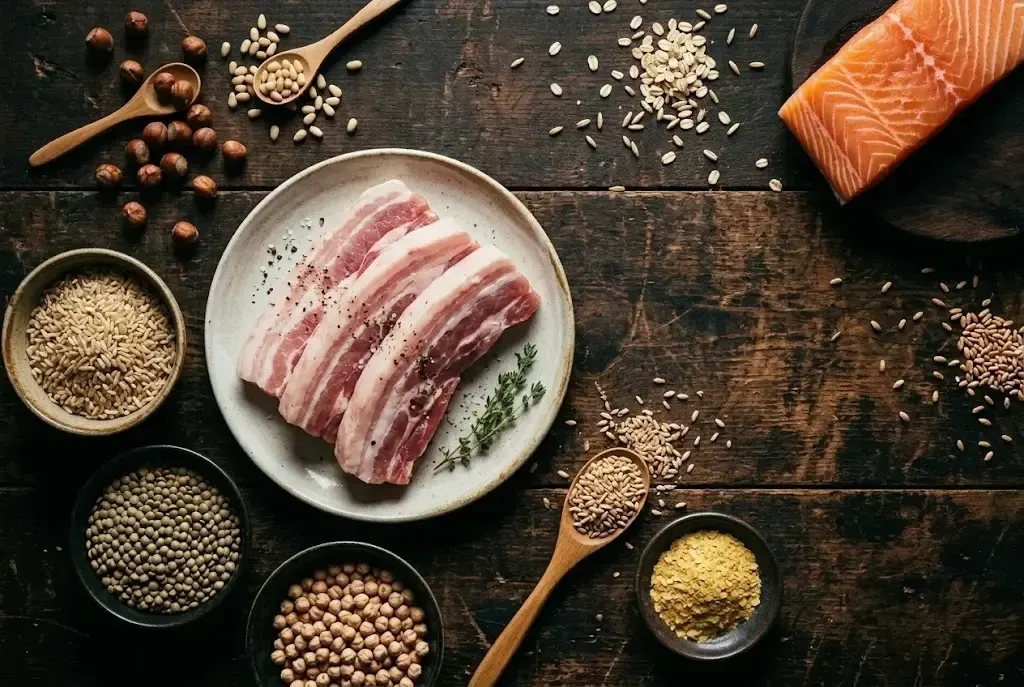
A luxury train crosses colonial Asia in the late nineteenth century. In the first-class carriages the rice arrives at the table polished, stripped of its husk, gleaming like tiny pearls. Meanwhile, in the crew’s quarters and in the military barracks at the next station, an inexplicable paralysis begins to take lives. Men’s legs give way, their hearts swell grotesquely until they fail, their nerves waste away until their bodies are reduced to little more than ghosts unable to take a single step.
The doctors of the day suspect a virus, an exotic bacterium, or some toxin hidden in the spices. Nobody imagines that the cause of one of the most devastating plagues of the Far East is not something present in the food, but precisely something missing from it.
That invisible substance was thiamine, later renamed in the textbooks as vitamin B1. It was the first of the B-complex dynasty, the opening link in a chain of catalysts without which human metabolism simply shuts down. Without B1, the calories you eat are as useful as a full tank of petrol in a car with no spark plugs: the fuel is there, but the spark never jumps.
Fact sheet
| Parameter | Detail |
|---|---|
| Chemical names | Thiamine, aneurin (historical) and thiamine pyrophosphate (TPP), its active form. |
| Type | Water-soluble, part of the B complex: barely stored at all, so it must be topped up daily. |
| Main superpower | Turning glucose into usable energy and firing up the engines of the central nervous system. |
| Quick fun fact | The tannins in coffee and tea can knock thiamine out inside your gut before you ever get the chance to absorb it. |
A little history…
The story of thiamine’s discovery reads like a medical western full of plot twists, false leads and serendipity. In the late nineteenth century the disease known as beriberi — a term usually translated from Sinhalese as «I can’t, I can’t» — was devastating Asian populations. The unwitting trigger had been the Industrial Revolution: steam-powered mills made it quick and cheap to strip the outer coat off rice, the bran, producing polished white rice. It was softer, it kept longer without going rancid, and it signalled social status. It also brought a silent epidemic with it.
The first great detective in this plot was the Japanese naval physician Takaki Kanehiro. In the 1880s Takaki noticed that sailors in the Imperial Navy fell seriously ill with beriberi on long voyages, when their diet shrank to almost nothing but white rice. The training ship Ryūjō had just returned from a tour of New Zealand, Chile, Peru and Hawaii with 169 of its 376 crew sick and 25 dead.
Takaki then talked his superiors into a bold experiment: send a second ship, the Tsukuba, along exactly the same route, but with barley, meat, milk and vegetables added to the rations. Of the Tsukuba’s 333 men, 14 fell ill and none died. What is more, those fourteen were precisely the ones who had refused to eat the new menu. Takaki proved the problem was nutritional thirty years before anyone knew what a vitamin was — though he wrongly credited the dietary protein.
The laboratory breakthrough came years later thanks to the Dutch physician Christiaan Eijkman, stationed in Java. Eijkman was hunting for the microbe responsible for beriberi by infecting chickens, and suddenly the birds developed a muscular weakness identical to the human paralysis. Before he could isolate the supposed pathogen, however, the hens recovered on their own.
Digging into the twist, Eijkman discovered that the military hospital’s cook had been temporarily feeding the birds leftover cooked white rice from the officers’ kitchen. When a new hospital director arrived and banned giving «refined military rice to civilian animals», the hens went back to cheap brown rice and regained their mobility. The causal agent was not in the rice: it was in what had been taken out of it.
Disease is not fought by killing germs alone, but by properly feeding the tissues that resist them.
In 1912 the Polish biochemist Kazimierz Funk isolated the active substance from rice bran. On discovering that it contained a nitrogenous group of the «amine» type and that it was vital to life, he coined the term «vitamin» (vita = life + amine). Although it later turned out that not all vitamins are amines, the name stuck for good. Eijkman would receive the Nobel Prize in 1929 for his findings, opening the door to the modern era of nutrition.
A manual of cellular mechanics: what does vitamin B1 do in your body?
To understand what vitamin B1 does inside you, we have to go down to the molecular level and look at the cellular engine. Thiamine on its own is just the spare part: to get to work, the body transforms it by adding two phosphate groups, turning it into its biologically active form, thiamine pyrophosphate (TPP) or thiamine diphosphate.
TPP acts as a coenzyme. If we picture the enzymes in our cells as hyper-specialised workers charged with cutting, assembling and transforming molecules, TPP is the indispensable tool without which those workers have their hands tied.
The glucose tollgate: pyruvate dehydrogenase
When you eat carbohydrates — a plate of pasta, a piece of fruit, a slice of bread — your digestion breaks them down into glucose. Glucose enters the cells and is split in half along an anaerobic pathway called glycolysis, producing two molecules of pyruvate. And this is where TPP comes in:
- Pyruvate has to cross the door of the mitochondrion — the cell’s power plant — to become acetyl-CoA and enter the famous Krebs cycle.
- The enzyme complex that runs that customs post, pyruvate dehydrogenase, absolutely requires TPP in order to strip a carbon atom off the pyruvate (oxidative decarboxylation).
- Without TPP, pyruvate does not get in. The cell then diverts the surplus into producing lactic acid, resulting in a toxic build-up of lactate in the blood and a sharp drop in the production of adenosine triphosphate (ATP), the fundamental energy currency.
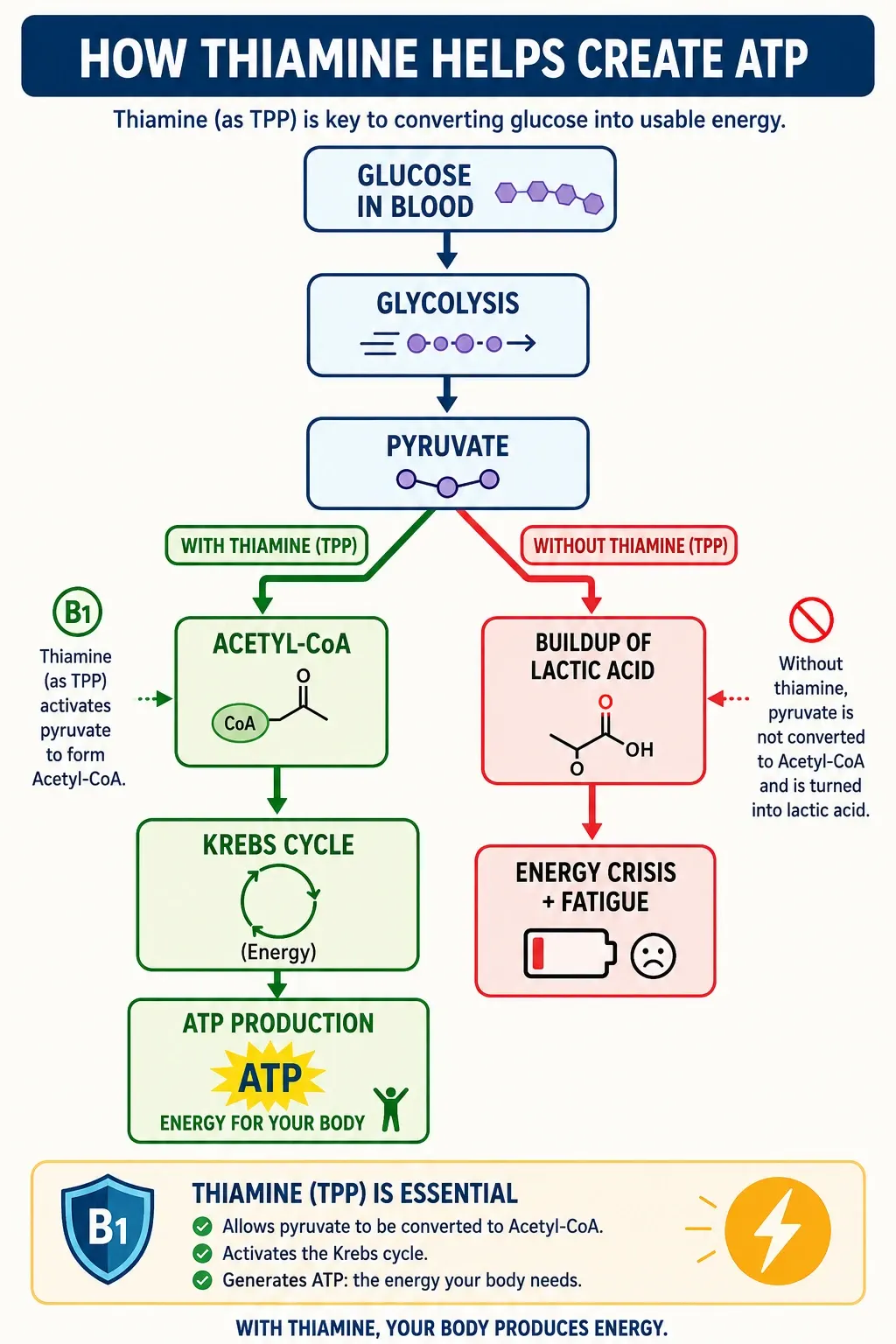
TPP also rides shotgun at two other crossroads: alpha-ketoglutarate dehydrogenase, inside the Krebs cycle itself, and transketolase, the enzyme that governs the pentose phosphate pathway on which DNA synthesis and antioxidant defence depend. Three bottlenecks, one single key.
Maintaining the electrical wiring: acetylcholine and myelin
The brain consumes roughly 20 % of all the body’s glucose, which makes it the organ most dependent on thiamine. And not only for the energy:
- Acetylcholine synthesis. The acetyl-CoA that TPP helps to make is also the starting material for acetylcholine, the basic neurotransmitter of memory, attention and muscular contraction.
- Maintenance of the myelin sheaths. Thiamine takes part in synthesising the lipids that coat and insulate neuronal axons. Without that protective layer, nerve impulses short-circuit and neuropathies appear.
The art of bioavailability
Unlike the fat-soluble vitamins, which are stored for months in adipose tissue and the liver, vitamin B1 is water-soluble. The human body holds barely 25 to 30 milligrams of thiamine in total — spread mainly across liver, heart, kidneys and brain — a reserve so meagre that it can be exhausted entirely in two or three weeks if it stops being replenished.
Sources of thiamine
There is a myth that citrus fruit or dark leafy greens are rich in every B vitamin. In the case of B1, the culinary reality is very different:
- The superstars: pork (cured ham included), brewer’s yeast, wheat germ and sunflower seeds.
- Solid sources: pulses (lentils, chickpeas), whole grains (brown rice, oats), sesame and nuts (pine nuts, hazelnuts).
- Secondary sources: fish such as salmon, trout or tuna, plus liver and offal.
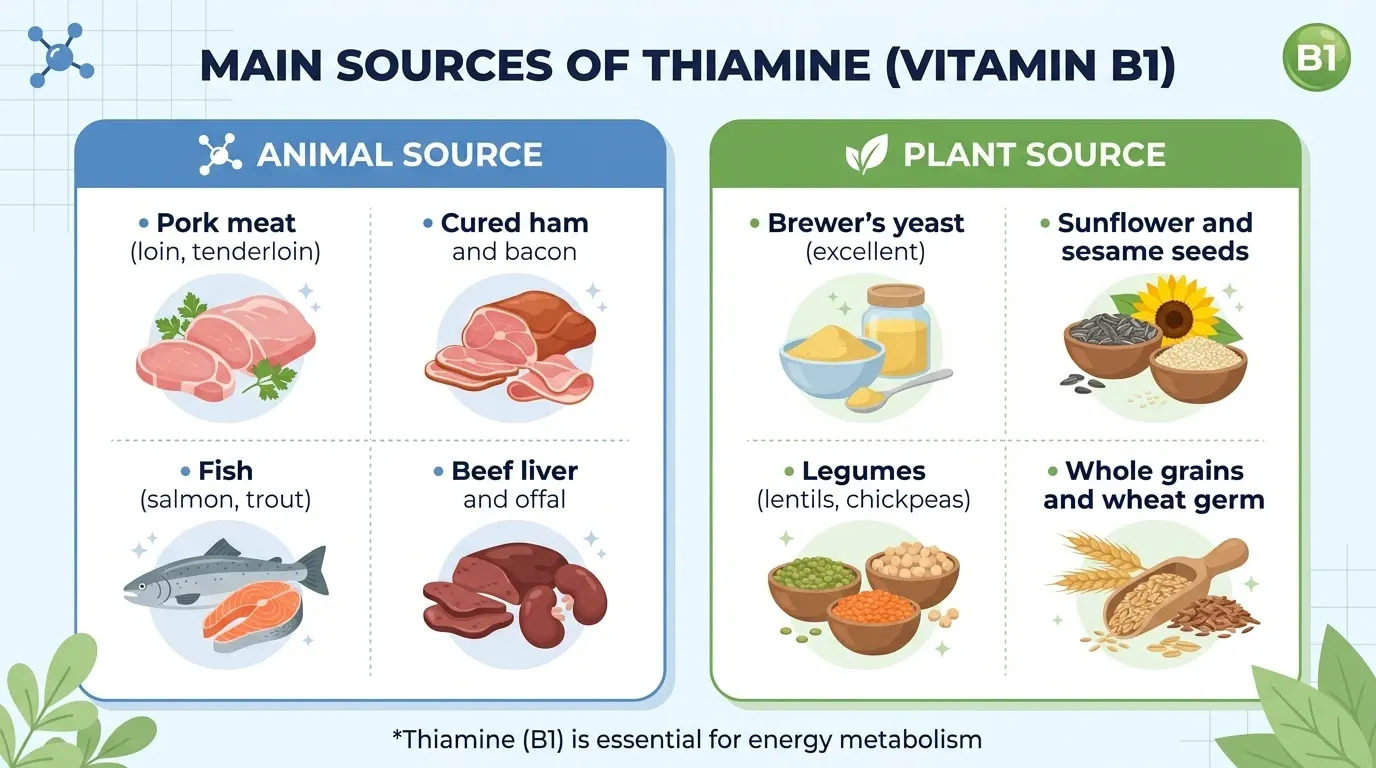
Note: as usual, plant sources tend to come loaded with antinutrients — especially grains, pulses, nuts and seeds — which makes it far more efficient to prioritise the animal ones.
Fragility in the kitchen
Thiamine is one of the most fragile molecules in the vitamin arsenal. Its chemical structure — a pyrimidine ring joined to a thiazole ring by a methylene bridge — is extremely vulnerable:
-
Heat and water. Being water-soluble, boiling vegetables means up to half the thiamine ends up dissolved in the cooking water, and prolonged heat degrades whatever is left. The fix is to favour steaming, quick sautéing, or making use of the broth.
-
Alkaline pH. Sodium bicarbonate — often used to keep vegetables green or to soften pulses — destroys thiamine quickly by breaking its methylene bridge.
-
Natural antithiamines.
- Thiaminases in raw fish. Certain shellfish and freshwater fish contain enzymes (thiaminases) that inactivate thiamine. Cooking the fish denatures the enzyme and removes the problem.
- Tannins and chlorogenic acid. Found in coffee, tea and cocoa. Drinking large amounts of strong tea or coffee right after a meal lets the tannins react with thiamine and turn it into an unabsorbable compound.
This is not a laboratory hypothesis: in north-eastern Thailand, where both factors sit side by side in the diet, dropping raw fermented fish — loaded with thiaminases — and betel nut — rich in tannins — was enough to improve the population’s thiamine status.
Light and shade: deficiency versus toxicity
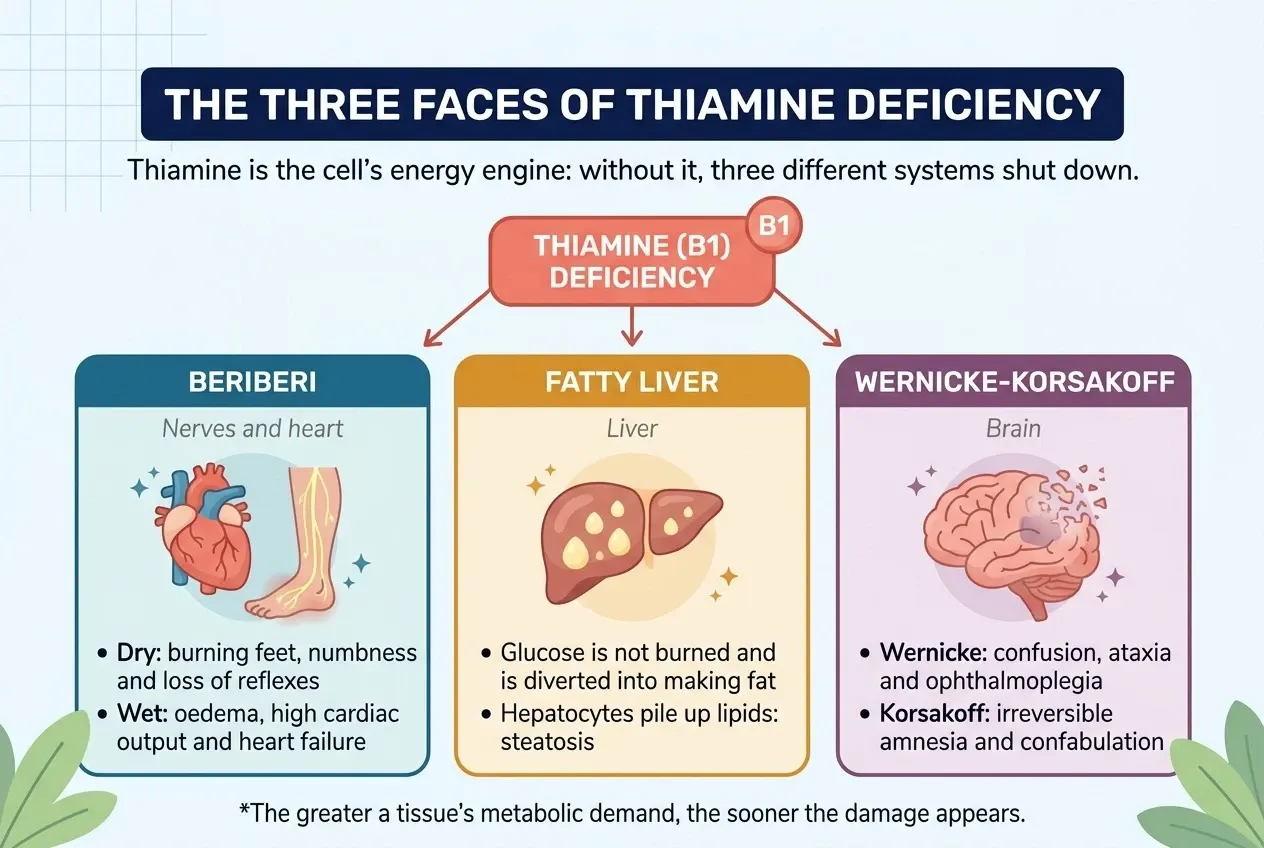
Since thiamine is the cell’s energy engine, its deficiency shows up dramatically in the tissues with the greatest metabolic demand: the nervous and cardiovascular systems, and the liver.
The deficit: when the spark goes out
Before any clinical disease appears, a subclinical shortfall translates into a vague but disabling picture: unexplained chronic fatigue, irritability, insomnia, loss of appetite and a subtle muscular weakness in the lower limbs. These symptoms are so generic that they are almost never pinned on a vitamin.
If the shortfall drags on, the picture organises itself into two classic forms:
- Dry beriberi. Affects mainly the peripheral nervous system. The nerves demyelinate: burning sensation in the feet, numbness, loss of reflexes and inability to walk (foot drop).
- Wet beriberi. Attacks the cardiovascular system. The blood vessels dilate massively and the heart enters a high-output state unable to sustain blood pressure, with severe oedema — massive swelling in the legs and lungs — and fulminant heart failure.
Thiamine and fatty liver
There is a metabolic paradox little known outside clinical biochemistry circles: thiamine deficiency can promote the development of fatty liver.
When sugars and carbohydrates are eaten, the liver processes them for energy. As we saw in the cellular manual, TPP is the indispensable key that lets pyruvate enter the mitochondria and be burned as fuel. Without enough thiamine, a bottleneck forms:
- Glucose jam. The liver’s mitochondria cannot properly burn the surplus glucose for want of the coenzyme.
- Diversion into de novo lipogenesis. Unable to oxidise the carbohydrates, the hepatocytes redirect that excess of accumulated metabolites into manufacturing new fatty acids.
- Lipid build-up. The liver starts packing that fat inside its own cells, triggering or worsening hepatic steatosis.
What begins as a harmless fatty deposit can progress to inflammation, fibrosis and, ultimately, severe liver damage. The reverse experiment works too: in animal models overfed on carbohydrate-rich diets, treatment with high doses of thiamine kept liver fat at normal levels despite the animals eating exactly the same thing.
In short: thiamine acts as an accidental cellular «degreaser»; without it, the hepatic refinery is forced to turn unburned sugars into fat deposits.
Wernicke-Korsakoff syndrome: the ghost of alcoholism
In Western societies, severe thiamine deficiency appears above all in connection with chronic alcohol consumption. Ethanol is a triple enemy: it supplies empty calories that crowd out real food, it inhibits intestinal absorption of thiamine by damaging its specific transporters — THTR1 and THTR2, encoded by the SLC19A2 and SLC19A3 genes — and it hampers its hepatic conversion into TPP.
The result is devastating:
- Wernicke’s encephalopathy. A medical emergency marked by mental confusion, unsteady gait (ataxia) and paralysis of the eye muscles (ophthalmoplegia).
- Korsakoff’s syndrome. If intravenous thiamine is not given in time, the illness progresses to an irreversible state in which the brain loses the ability to form new memories. To fill the overwhelming gaps, patients resort to confabulation: they unconsciously invent elaborate stories about their own lives, trapped in a perpetually fragmented present.
Toxicity
Unlike vitamins A or D, oral thiamine has no established tolerable upper intake level (UL). Being water-soluble, the kidneys efficiently excrete any excess in the urine, and high oral doses do not usually cause serious adverse effects beyond the odd gastrointestinal complaint.
The myth corner
«Taking vitamin B1 keeps mosquitoes from biting you»
There is a widespread popular belief that massive doses of vitamin B1 make your sweat give off a smell imperceptible to humans but repellent to mosquitoes. Even though thousands of travellers still swallow thiamine tablets before flying to the tropics, rigorous evidence has debunked this myth repeatedly.
When it has been put to the test under controlled conditions — with large samples of volunteers and more than a single mosquito species — vitamin B supplementation has shown no effect whatsoever on the number of bites. There is indeed enormous, consistent individual variation in how attractive each body is to mosquitoes, but that variation has nothing to do with thiamine: mosquitoes navigate mainly by the concentration of carbon dioxide we breathe out, by lactic acid and by body heat, three variables on which oral thiamine has not the slightest deterrent effect.
Scientific frontier
Current thiamine research has left the classic study of beriberi behind and moved into the frontier of precision medicine:
- Benfotiamine and diabetes. Benfotiamine is a fat-soluble synthetic derivative of thiamine that crosses cell membranes with extraordinary ease and multiplies its concentration in the tissues. By activating transketolase, it can block three of the major pathways through which hyperglycaemia damages blood vessels, among them the one leading to advanced glycation end products (AGEs). In diabetic animals it prevented experimental retinopathy, and its role against neuropathy is now under investigation.
- The gut-brain axis and the microbiota. Analysing the genomes of human gut bacteria has shown that a good share of them — Bacteroidetes prominent among them — can make thiamine de novo and trade it with each other and with the host. It is a silent source of the vitamin whose disruption could contribute to states of chronic fatigue and gut inflammation.
- Alzheimer’s and glucose metabolism. An early pathophysiological feature of Alzheimer’s is cerebral glucose hypometabolism: the brain loses the ability to consume sugar. Since the key enzymes of that process depend on thiamine, and their activities are consistently diminished in autopsied brains, high-bioavailability analogues are being trialled to see whether restoring the mitochondrial energy of neurons can slow cognitive decline.
Next stop…
Thiamine’s journey reminds us that the human machine, however sophisticated, rests on tiny molecular balances. A single sulphur atom and a nitrogen ring sustain the flow of our consciousness, the beat of our heart and the strength of our legs.
Next up: vitamin B2 (riboflavin), the fluorescent pigment that turns food into energy.
References and scientific support
- Polyneuritis in hens fed polished rice. Eijkman, C. (1897). Eine Beri-Beri-ähnliche Krankheit der Hühner. Virchows Archiv, 148(3), 523-532. View study on Springer
- The naval experiment that beat the discovery by thirty years. Sugiyama, Y., & Seita, A. (2013). Kanehiro Takaki and the control of beriberi in the Japanese Navy. Journal of the Royal Society of Medicine, 106(8), 332-334. View study on PubMed
- The paper that coined the word «vitamin». Funk, C. (1912). The etiology of the deficiency diseases. The Journal of State Medicine, 20, 341-368. View study on PubMed
- TPP as the coenzyme of energy metabolism. Lonsdale, D. (2006). A review of the biochemistry, metabolism and clinical benefits of thiamin(e) and its derivatives. Evidence-Based Complementary and Alternative Medicine, 3(1), 49-59. View study on PubMed
- The intestinal transport of thiamine. Rindi, G., & Laforenza, U. (2000). Thiamine intestinal transport and related issues: recent aspects. Proceedings of the Society for Experimental Biology and Medicine, 224(4), 246-255. View study on Wiley
- Antithiamine factors measured in a real population. Vimokesant, S. L., Hilker, D. M., Nakornchai, S., Rungruangsak, K., & Dhanamitta, S. (1975). Effects of betel nut and fermented fish on the thiamin status of northeastern Thais. The American Journal of Clinical Nutrition, 28(12), 1458-1463. View study on ScienceDirect
- Wernicke’s encephalopathy and the damage of alcoholism. Sechi, G., & Serra, A. (2007). Wernicke’s encephalopathy: new clinical settings and recent advances in diagnosis and management. The Lancet Neurology, 6(5), 442-455. View study on PubMed
- High-dose thiamine against fatty liver. Kalyesubula, M., Mopuri, R., Asiku, J., Rosov, A., Yosefi, S., Edery, N., Bocobza, S., Moallem, U., & Dvir, H. (2021). High-dose vitamin B1 therapy prevents the development of experimental fatty liver driven by overnutrition. Disease Models & Mechanisms, 14(3), dmm048355. View study on PubMed
- Benfotiamine against the vascular damage of hyperglycaemia. Hammes, H. P., Du, X., Edelstein, D., Taguchi, T., Matsumura, T., Ju, Q., Lin, J., Bierhaus, A., Nawroth, P., Hannak, D., Neumaier, M., Bergfeld, R., Giardino, I., & Brownlee, M. (2003). Benfotiamine blocks three major pathways of hyperglycemic damage and prevents experimental diabetic retinopathy. Nature Medicine, 9(3), 294-299. View study on PubMed
- Thiamine-dependent processes in neurodegeneration. Gibson, G. E., & Blass, J. P. (2007). Thiamine-dependent processes and treatment strategies in neurodegeneration. Antioxidants & Redox Signaling, 9(10), 1605-1619. View study on Liebert
- The gut microbiota as a B-vitamin factory. Magnúsdóttir, S., Ravcheev, D., de Crécy-Lagard, V., & Thiele, I. (2015). Systematic genome assessment of B-vitamin biosynthesis suggests co-operation among gut microbes. Frontiers in Genetics, 6, 148. View study on PubMed
- The repellent myth, put to the test. Ives, A. R., & Paskewitz, S. M. (2005). Testing vitamin B as a home remedy against mosquitoes. Journal of the American Mosquito Control Association, 21(2), 213-217. View study on PubMed
- Supplementing thiamine when status is already normal: mood and cognition. Benton, D., Griffiths, R., & Haller, J. (1997). Thiamine supplementation mood and cognitive functioning. Psychopharmacology, 129(1), 66-71. View study on PubMed
We're building the space for you to comment on the articles.
Continue reading
Glycine: the forgotten building block of life
The key amino acid that slows cellular ageing, improves sleep and rebuilds your tissues from within

The truth about antioxidants
The biology behind our real defence network against oxidative stress
The electricity of food
The metabolic pathways of the macronutrients and how mitochondria reduce food to a source of electrons