Vitamin B6
The workshop where neurotransmitters are made
In 1952, the paediatric wards of several hospitals across the United States witnessed a chilling scene: apparently healthy infants only a few months old began to suffer severe, violent, inexplicable seizures. Their electroencephalograms showed chaotic brain activity, identical to that of the most severe epilepsy. Conventional anticonvulsants, sedatives and thermal therapies were tried, and nothing stopped the spasms. To the doctors’ horror, some babies died or were left with permanent neurological damage, while others recovered spontaneously without a trace of the crisis.
The mystery took months to solve, and the decisive clue was not found in a hospital or a neurology laboratory, but in the quality-control department of a well-known brand of infant formula. The company had subtly modified the heat sterilisation process for its canned milk. The extra temperature did not alter the taste or destroy the proteins, but it quietly destroyed a small, fragile, indispensable molecule: pyridoxine. When a microscopic dose of purified vitamin B6 was injected into the babies mid-seizure, the spasms stopped within minutes, returning calm to the infant brain as though a biological switch had been flipped.
That dramatic episode revealed to the world of biochemistry that vitamin B6 is no mere «nutritional supplement», but the great conductor of the amino-acid orchestra: the master catalyst on which the production of the neurotransmitters that hold our mental reality together depends.
Technical profile
| Parameter | Detail |
|---|---|
| Chemical names | Pyridoxine (the form found in plants and supplements), pyridoxal and pyridoxamine (the animal forms). Its active metabolic form is pyridoxal 5’-phosphate (PLP). |
| Type | Water-soluble, from the B complex: the surplus leaves in the urine and it has to be topped up daily. |
| Main superpower | Running the body’s amino-acid traffic: turning some molecules into others and assembling the neurotransmitters your mood depends on. |
| Quick curiosity | It is one of the very few water-soluble vitamins that, taken in massive doses over a long period, can cause severe neurological toxicity. |
A little history…
In the early twentieth century, biochemistry was living through its own gold rush. After the discovery of the basic fat-soluble and water-soluble factors, the list of so-called «vital amines» would not stop growing. The B complex, however, was a swamp where confusion reigned: what was then called «vitamin B2» was not a molecule but a catch-all for everything that survived heat.
In the 1930s, the Hungarian physician and researcher Paul György, based at Case Western Reserve University, was hunting for the cause of a severe dermatosis in laboratory rats. Rats fed a purified diet developed a painful inflammation of the paws, ears and snout, a condition called acrodynia. For a long time this pathology was believed to be identical to human pellagra, caused by a lack of niacin (vitamin B3), or to beriberi, caused by a lack of thiamine (vitamin B1).
György suspected that more than one active ingredient was hiding inside that amorphous extract. He designed an elegant process of elimination: he subjected the yeast extracts to various chemical and thermal treatments in order to destroy thiamine and riboflavin (vitamin B2 in the modern sense) one after the other. When he gave the remaining fraction to the sick rats, the inflamed skin healed. In 1934, György formally christened that surviving factor vitamin B6.
The chemical isolation was not long in coming. In 1938, almost simultaneously, five independent research groups in the United States, Germany and Japan managed to crystallise the pure vitamin from rice bran and yeast; among them, that of the American chemist Samuel Lepkovsky. A year later its chemical structure was solved —separately, by Leslie Harris and Karl Folkers’s group and by Richard Kuhn’s— revealing a pyridine ring decorated with hydroxyl and methyl groups. György then proposed the name we all know it by: pyridoxine.
The story had one last twist, however. In the 1940s, the American biochemist Esmond E. Snell discovered that commercial pyridoxine was not the most active form in living tissue. Laboratory bacteria grew far faster when they were supplied with oxidised or aminated derivatives of the molecule: pyridoxal and pyridoxamine. More than that: Snell showed that those two forms turned into one another through transamination reactions, which is exactly the job the vitamin performs inside us. The real engine in our cells was not the vitamin as it enters the mouth, but its phosphorylated form: pyridoxal 5’-phosphate (PLP).
A manual of cellular mechanics: what does vitamin B6 do in your body?
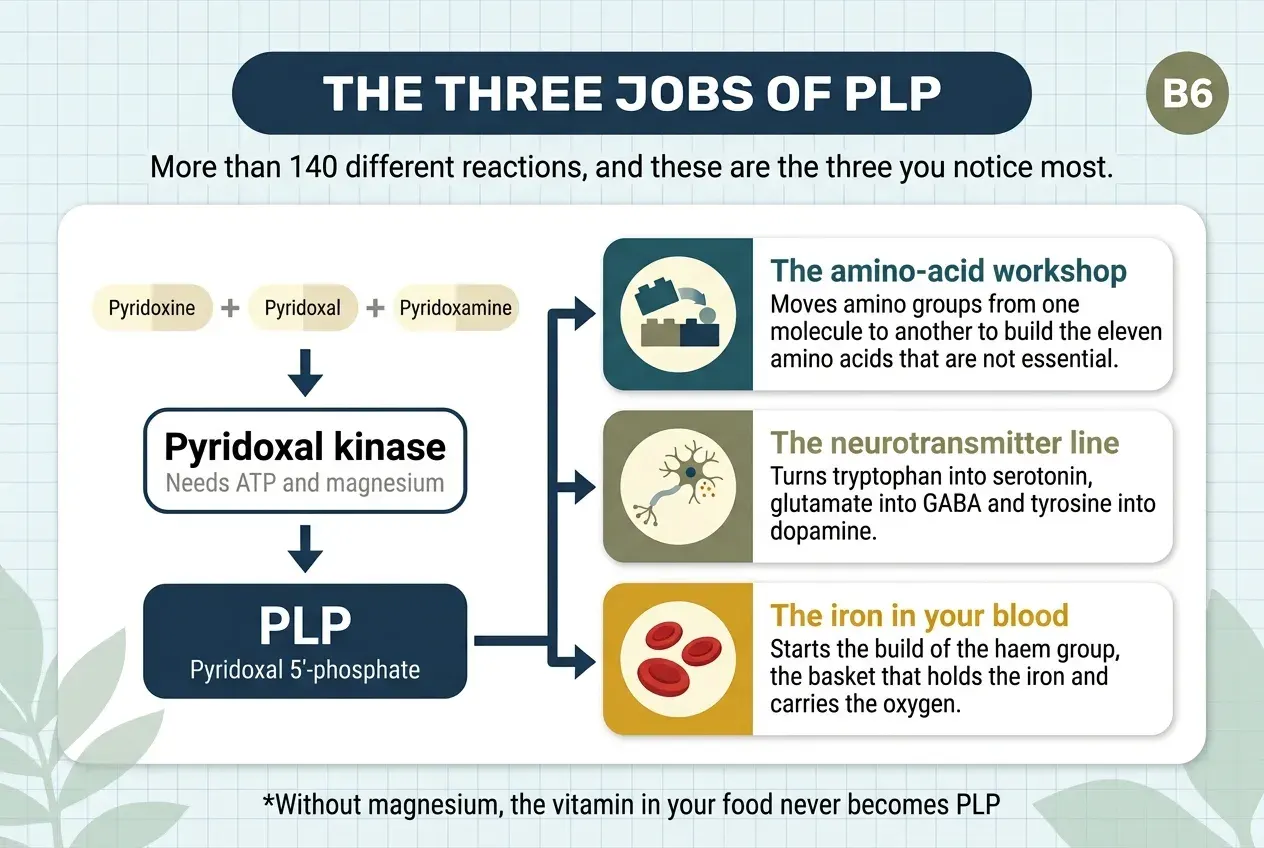
To understand what vitamin B6 does in the body, picture the cell as a gigantic building site. If amino acids are the bricks the body’s structures are built from, vitamin B6 —in its active form, pyridoxal 5’-phosphate (PLP)— is the foremen’s Swiss-army toolbox.
PLP acts as a coenzyme in more than 140 distinct enzymatic reactions, roughly 4% of every catalogued enzymatic activity. No other coenzyme handles such a varied range of chemical transformations.
Transamination
The human body needs twenty different amino acids to build tissues, enzymes and antibodies, but only nine are essential in the diet. How does the body make the other eleven? Through transamination. Transaminase enzymes, equipped with PLP, take the amino group (−NH₂) from a spare amino acid and transfer it to another molecule to make the exact amino acid required at that precise moment. Without B6, the ability to remodel the body’s own proteins grinds to a halt.
Neurotransmitter synthesis
The brain uses amino acids from the diet to make the chemicals that regulate emotion, wakefulness and sleep. Vitamin B6 is the compulsory step on this assembly line:
- Tryptophan → serotonin: the enzyme aromatic L-amino acid decarboxylase requires PLP to turn tryptophan into serotonin, the molecule of wellbeing and calm.
- Glutamate → GABA: glutamate is the brain’s main exciter. To stop neurons «burning out» from overexcitation, the enzyme glutamate decarboxylase —B6-dependent— strips off a carboxyl group and turns it into GABA, the nervous system’s main inhibitory brake. When B6 is missing, the brake fails: that is exactly the hyperexcitability we saw in the babies of 1952.
- Tyrosine → dopamine and noradrenaline: the two keys to the reward system, motivation and attention.
Haemoglobin and glycogen
Skeletal muscle stores large amounts of glucose as glycogen for energy emergencies. The enzyme that breaks that store open, glycogen phosphorylase, needs PLP to work. In fact, around 80% of all the B6 in your body is not in the brain or the liver, but packed into muscle mass, bound to this enzyme. Your largest reserve of the brain’s vitamin sits, paradoxically, in your thighs.
On top of that, B6 catalyses the first step in building the haem group, the «basket» that holds the iron inside red blood cells and carries oxygen to every corner of the body.
The art of bioavailability
In the nutritional jungle, B6 shows up wearing very different faces depending on whether the food came from a pasture or a vegetable patch. Understanding that difference is essential to avoiding deficiency.
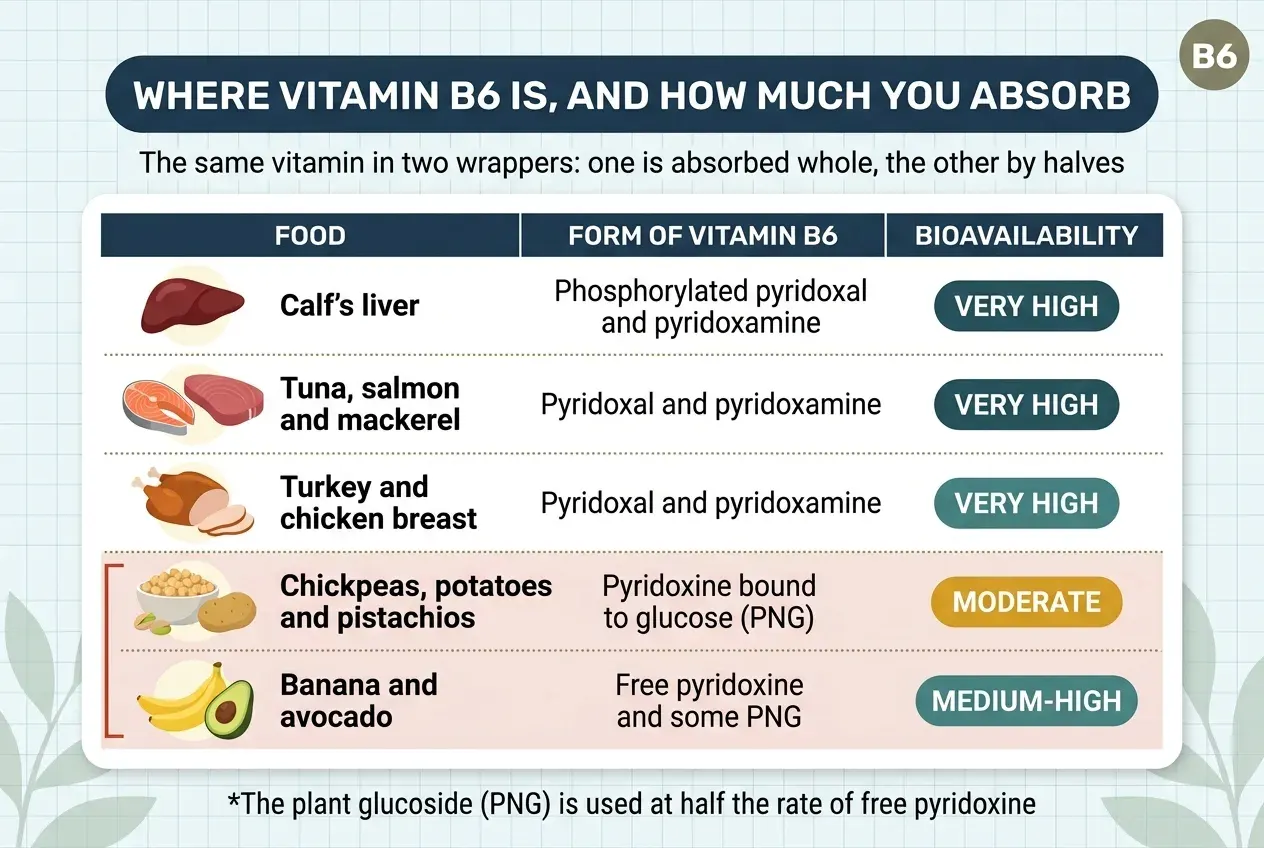
In the plant kingdom —in wholegrain cereals, some pulses and leafy green vegetables— a significant share of vitamin B6 is bound to a glucose molecule, forming a compound called pyridoxine-5’-β-D-glucoside (PNG).
Our gut lacks enzymes efficient enough to break that bond between sugar and vitamin. The result has been measured: when PNG labelled with stable isotopes is administered, the human body uses about half of what it would use from the same amount of free pyridoxine. That is why someone on a strictly plant-based diet may need a slightly higher nominal intake of the vitamin. And there is a more awkward detail: PNG is not merely poorly absorbed, it also gets in the way of the free pyridoxine travelling alongside it in the same meal.
The main sources of vitamin B6
There is a popular belief that the banana is the undisputed king of B6. It is an excellent plant source, but the gastronomic and biological reality is far richer:
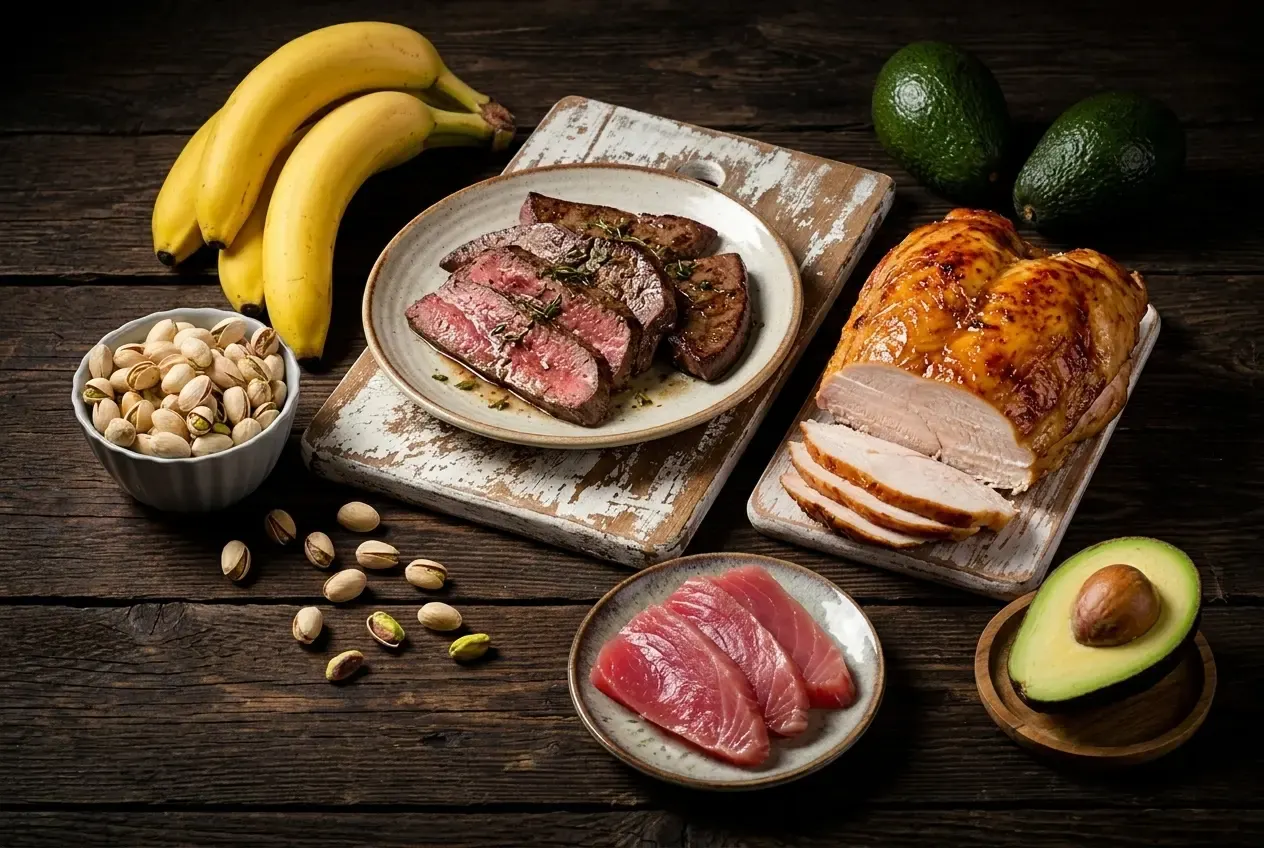
- Oily and lean fish: tuna, salmon and mackerel hold high concentrations of pyridoxal and pyridoxamine, ready for our cells to use.
- Offal: calf’s or chicken liver is by far the most concentrated store of the vitamin in the animal kingdom.
- Poultry: turkey and chicken breast offer a B6 density well above that of most vegetables.
- Notable plant sources: chickpeas —a cup of cooked chickpeas beats almost any fruit—, potatoes, sunflower seeds, pistachios and, of course, bananas and avocados.
Vulnerability in the kitchen
Vitamin B6 is water-soluble and sensitive to its environment, so much of what ends up on your plate depends on how you cooked it:
- The leaching effect: boiling chopped potatoes or vegetables in plenty of water lets B6 dissolve into the liquid. If that cooking water is thrown away, boiling takes with it anywhere from a third to more than half of the original content. Steaming, baking or microwaving keeps the molecule almost intact.
- Heat and light sensitivity: pyridoxal, abundant in meat, is sensitive to prolonged extreme heat; cooked meat retains a little over half the vitamin it started with. Intense heat preserving or frying at very high temperatures degrades part of the content —the 1952 accident was precisely that, at industrial scale—. On top of this, B6 dissolved in fluids is strongly photosensitive: direct sunlight destroys it quickly.
Synergies and blockers
- Synergy with magnesium: the enzyme that turns dietary pyridoxine into active PLP inside your cells, pyridoxal kinase, does not run on the vitamin alone: it needs ATP, and magnesium holding that ATP in place in its active site. Without enough magnesium, the metabolic processing of B6 becomes inefficient.
- The hydrazide antagonist: certain drugs interact directly with B6’s structure and neutralise it. The classic case is isoniazid, an antibiotic used against tuberculosis, which binds to pyridoxal and forms an inactive hydrazone that is excreted in the urine; along the way it also slows the enzyme that activates the vitamin. That is why patients on isoniazid are given prophylactic B6 supplements to prevent neuropathy.
- Alcohol and tobacco: acetaldehyde, the first metabolite of alcohol breakdown in the liver, displaces PLP from its cellular transport proteins and speeds up its enzymatic destruction.
Light and shadow: deficiency versus toxicity
Vitamin B6 inhabits a rather delicate physiological balance. It is one of the few molecules in nutrition where both too little and too much show their symptoms in the nervous system.
The deficit
A mild or moderate B6 deficit is subtle, and is often mistaken for everyday stress or chronic fatigue. As PLP reserves plummet, however, the symptoms take on a characteristic biological tint:
- Neurological and affective dysfunction: depression, confusion, irritability and, in extreme cases, tremors and hyperacusis, an extreme sensitivity to noise.
- Glossitis and angular cheilitis: the tongue turns smooth, red and inflamed, and painful cracks form at the corners of the mouth because collagen synthesis is interrupted and the skin renews itself slowly.
- Sideroblastic anaemia: despite ample iron reserves in the body, red blood cells cannot make haemoglobin. The iron piles up uselessly inside the mitochondria of developing erythroblasts, forming rings visible under the microscope: «ring sideroblasts».
- Homocysteine build-up: unable to detoxify homocysteine through the cystathionine-β-synthase route, which is B6-dependent, this sulphurous amino acid rises in the blood, damages the vascular endothelium and drives up cardiovascular risk.
Toxicity
Water-soluble vitamins are usually considered safe because the excess leaves in the urine. Vitamin B6, however, is a partial exception.
Reaching toxic levels through food is practically impossible. The problem shows up with uncontrolled synthetic supplementation. To get a sense of the distance involved: the recommended daily amount for an adult is around 1.3 to 1.7 mg, and the classic poisoning cases were described with doses of 100 to 200 mg a day sustained over months or years. In 2023, after reviewing the evidence, the European food safety authority set the tolerable upper limit for supplementation at just 12 mg a day for adults —a notable cut from what had been assumed safe for decades.
In the 1970s and 1980s, massive doses of pyridoxine became popular as a treatment for premenstrual tension or carpal tunnel syndrome. Some time later, neurologists began seeing patients with an enigmatic complaint: ataxic sensory neuropathy.
Patients lost the ability to feel where their feet were as they walked. They felt severe «glove and stocking» numbness, burning in the limbs, and an inability to stay upright with their eyes closed: a positive Romberg’s sign.
The mechanism behind this toxicity is ironic. High doses of unphosphorylated pyridoxine in the blood saturate the cellular transporters and compete enzymatically with the active form, PLP, creating a state of functional deficiency at the neuronal level. The vitamin in excess ends up doing the same thing its absence does. Pyridoxine at toxic doses destroys the neurons of the dorsal root ganglion, the ones responsible for proprioception.
Fortunately, stopping the massive supplementation usually makes the symptoms recede, although nerve recovery can take months or years.
The myth corner
«Supplementing with B6 relieves pregnancy nausea with no risk at all»
Because vitamin B6 is frequently prescribed —often combined with doxylamine— to relieve first-trimester nausea, there is a popular belief that any pregnant woman can take megadoses of vitamin B6 on her own initiative, as a «natural, drug-free remedy».
The scientific reality is more nuanced. That the doxylamine-and-pyridoxine combination is safe in pregnancy at controlled therapeutic doses is among the best-documented facts in obstetric pharmacology: it is the only antiemetic with the FDA’s category A. Its efficacy, on the other hand, is more modest than its reputation suggests, and reanalyses of the trial that approved it dispute how much of the effect is clinically meaningful. What certainly does not carry over from the therapeutic dose to the self-prescribed megadose is the safety: pyridoxine crosses the placenta, and in healthy newborns exposed to high levels the opposite of the expected effect has been described — neuronal hyperexcitability rather than protection from seizures. There are also documented cases of neonates who had seizures in their first days of life, attributed to the mother’s pyridoxine treatment during gestation and breastfeeding. Prenatal supplementation must always be under direct medical supervision.
The scientific frontier
The microbiota as an internal B6 factory
In recent years, research on B6 has stopped focusing solely on human nutrition and turned towards the microscopic jungle in our gut: the microbiota.
Several strains of commensal bacteria —Bifidobacterium longum, Bacteroides fragilis, Prevotella copri and others— carry the genetic machinery to synthesise vitamin B6 de novo, and they do it straight into its phosphorylated form. In the large intestine, that bacterial PLP is dephosphorylated and the free vitamin is absorbed by passive transport, which means you have two suppliers: what you eat and what your tenants manufacture.
The interesting part is that this bacterial production does not seem to be merely a nutritional backup. In 2026, a paper published in Gut Microbes knocked out the pdxJ gene —the one gut bacteria use to make B6— in the microbes colonising its experimental animals, and observed a drop in dopamine and a deterioration in motor coordination that were corrected by supplementing the vitamin. The link is direct: bacterial PLP is the cofactor the host needs for its own decarboxylase enzyme to turn L-DOPA into dopamine. The authors also found an enrichment of the bacterial PLP synthesis pathways in faecal samples from patients with Parkinson’s disease, which opens an uncomfortable and fascinating question at once about who really supplies the cofactor for our neurotransmitters.
The other front is immunological. PLP-dependent enzymes sit at the exact crossroads between the host’s tryptophan metabolism and that of its bacteria, and patients with inflammatory bowel disease in an active phase show significantly lower plasma PLP concentrations than those in remission. Whether that drop is cause, consequence or both —and whether keeping a balanced supply of B6 in the mucosa would help prevent dysbiosis— is precisely what is being investigated now.
The kynurenine pathway and neuroageing
When there is chronic systemic inflammation —common in ageing, obesity or major depression— the body diverts the amino acid tryptophan away from serotonin production and pushes it towards the kynurenine pathway. That pathway can end in very different products: kynurenic acid, which blocks the NMDA receptor and protects the neuron, or quinolinic acid, a potent neurotoxin.
The two enzymes that govern that split —kynurenine aminotransferase and kynureninase— depend on PLP, and they are not equally sensitive to its scarcity: kynureninase drops out first, so when B6 is missing the tryptophan traffic is diverted towards by-products nobody wants. If the deficit coincides with an inflammatory episode, the balance tips in the worst possible direction. Current research is evaluating PLP status as a biomarker for anticipating cognitive decline.
Next stop…
We reach the end of this instalment, devoted to the most versatile catalyst in our cellular chemical catalogue, a single molecule that acts as customs officer for proteins and guardian of neurotransmitters.
In the next article: vitamin B7 (biotin), the silent molecule that weaves the architecture of keratin, turns macronutrients into pure fuel and guards cellular metabolism from the root up.
References and scientific support
- The clinical report of the 1952 seizure epidemic, caused by an overheated infant formula. Coursin, D. B. (1954). Convulsive seizures in infants with pyridoxine-deficient diet. JAMA, 154(5), 406-408. View study (DOI)
- The letter in which György separated a new factor from the catch-all then called «vitamin B2» and christened it B6. György, P. (1934). Vitamin B2 and the pellagra-like dermatitis in rats. Nature, 133(3365), 498-499. View study (DOI)
- The work that showed pyridoxal and pyridoxamine convert into one another by transamination, the vitamin’s central trade. Snell, E. E. (1945). The vitamin B6 group. V. The reversible interconversion of pyridoxal and pyridoxamine by transamination reactions. Journal of the American Chemical Society, 67(2), 194-197. View study (DOI)
- The genomic count the figures come from: more than 140 PLP-dependent enzymatic activities, 4% of all those catalogued. Percudani, R., & Peracchi, A. (2003). A genomic overview of pyridoxal-phosphate-dependent enzymes. EMBO Reports, 4(9), 850-854. View study (DOI)
- The review that lays out how the cell recycles and activates the vitamin until it becomes PLP. Di Salvo, M. L., Contestabile, R., & Safo, M. K. (2011). Vitamin B6 salvage enzymes: mechanism, structure and regulation. Biochimica et Biophysica Acta (BBA) - Proteins and Proteomics, 1814(11), 1597-1608. View study (DOI)
- A modern overview of everything B6 holds up in cell physiology. Parra, M., Stahl, S., & Hellmann, H. (2018). Vitamin B6 and its role in cell metabolism and physiology. Cells, 7(7), 84. View study (DOI)
- The muscle biopsies that placed around 80% of the body’s B6 in muscle, bound to glycogen phosphorylase. Coburn, S. P., Lewis, D. L. N., Fink, W. J., Mahuren, J. D., Schaltenbrand, W. E., & Costill, D. L. (1988). Human vitamin B-6 pools estimated through muscle biopsies. The American Journal of Clinical Nutrition, 48(2), 291-294. View study (DOI)
- The stable-isotope measurement of how much plant B6 is lost: the glucoside is used at half the rate of free pyridoxine. Gregory, J. F., Trumbo, P. R., Bailey, L. B., Toth, J. P., Baumgartner, T. G., & Cerda, J. J. (1991). Bioavailability of pyridoxine-5’-β-D-glucoside determined in humans by stable-isotopic methods. The Journal of Nutrition, 121(2), 177-186. View study (DOI)
- The review that established giving pyridoxine alongside isoniazid to prevent the neuropathy of tuberculosis treatment. Snider, D. E., Jr. (1980). Pyridoxine supplementation during isoniazid therapy. Tubercle, 61(4), 191-196. View study (DOI)
- The seminal study of ataxic sensory neuropathy from pyridoxine megadoses, in seven adults who improved once it was withdrawn. Schaumburg, H., Kaplan, J., Windebank, A., Vick, N., Rasmus, S., Pleasure, D., & Brown, M. J. (1983). Sensory neuropathy from pyridoxine abuse: a new megavitamin syndrome. New England Journal of Medicine, 309(8), 445-448. View study (DOI)
- The European review that cut the upper supplementation limit to 12 mg a day, with peripheral neuropathy as the critical effect. EFSA Panel on Nutrition, Novel Foods and Food Allergens (2023). Scientific opinion on the tolerable upper intake level for vitamin B6. EFSA Journal, 21(5), e08006. View the report (DOI)
- The official fact sheet with reference intakes, status markers and drug interactions. National Institutes of Health, Office of Dietary Supplements. Vitamin B6: fact sheet for health professionals. View the fact sheet
- The review of the role commensal bacteria play in synthesising B vitamins and its effect on host immunity. Yoshii, K., Hosomi, K., Sawane, K., & Kunisawa, J. (2019). Metabolism of dietary and microbial vitamin B family in the regulation of host immunity. Frontiers in Nutrition, 6, 48. View study (DOI)
- PLP-dependent enzymes at the crossroads between the host’s tryptophan metabolism and its bacteria’s, with the PLP deficit in inflammatory bowel disease. Cellini, B., Zelante, T., Dindo, M., Bellet, M. M., Renga, G., Romani, L., & Costantini, C. (2020). Pyridoxal 5’-phosphate-dependent enzymes at the crossroads of host-microbe tryptophan metabolism. International Journal of Molecular Sciences, 21(16), 5823. View study (DOI)
- The work that stripped gut bacteria of their B6 gene and watched the host’s dopamine and motor coordination fall. Kim, D., Li, M., Nguyen, T. H., Choi, Y. J., Jang, S., Kim, M., Kim, Y. K., Shin, M. K., de Guzman, A. C. V., & Park, S. (2026). Vitamin B6 produced by gut microbiome regulates host behavioral phenotypes through dopaminergic metabolism. Gut Microbes, 18(1), 2695485. View study (DOI)
We're building the space for you to comment on the articles.
Continue reading

Glycine: the forgotten building block of life
The key amino acid that slows cellular ageing, improves sleep and rebuilds your tissues from within

The truth about antioxidants
The biology behind our real defence network against oxidative stress

The one and only
Why environment, diet and freedom dictate the true richness and nutritional density of the egg